
Art by Martin & Anang
What happens to an artwork when it leaves the gallery, spends five years outdoors, and comes back carrying the marks of weather, growth and decay? And what can a series of photographs tell us about food, when the people buying it become just as important as the crops themselves?
In the exhibition Cultivators of Life: Growing Seedbeds of Knowledge, these questions open up into much larger conversations about how we live with the land, how we share resources, and how knowledge grows through everyday practice. At MODEM – Centre for Modern and Contemporary Art in Debrecen, Hungary, the exhibition brings together artists whose work explores the relationships between cultivation, biodiversity, memory, food systems and community.
Two projects in the exhibition approach these subjects through practices that began well beyond the gallery. Both are rooted in everyday activities, and both have developed in response to the people, places and circumstances around them.
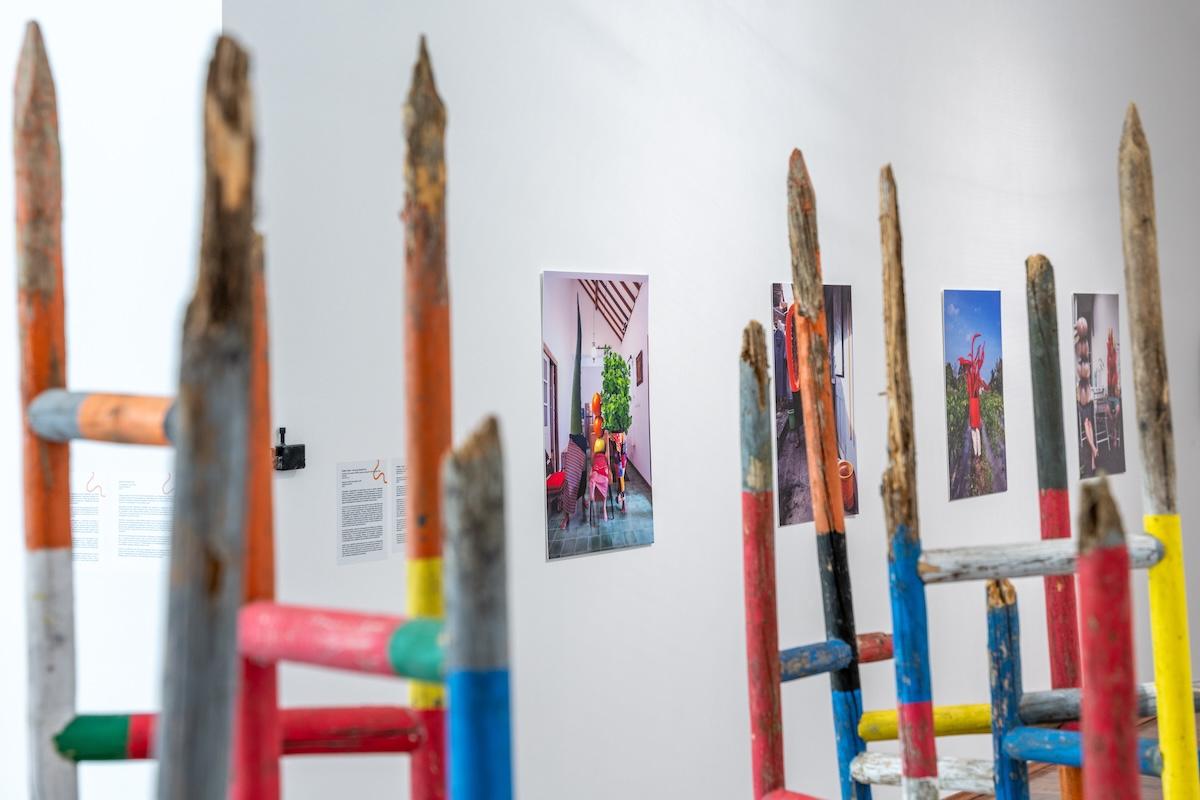
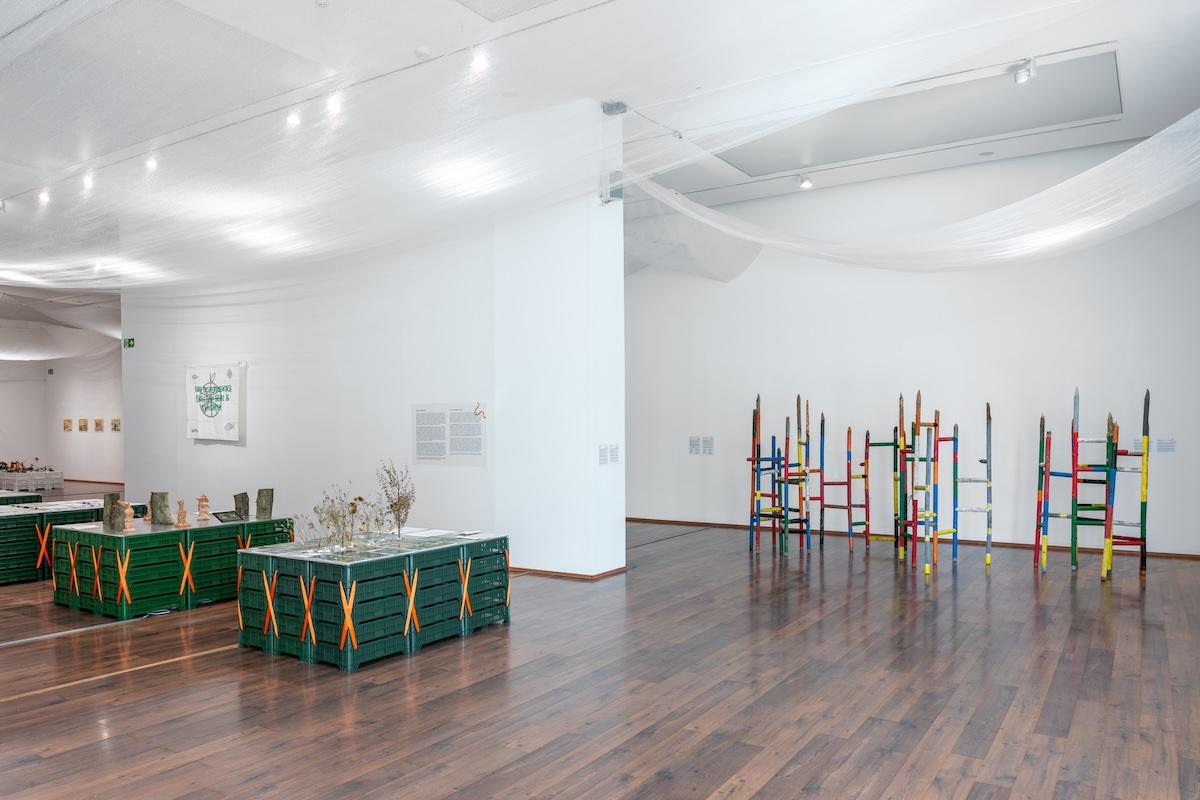
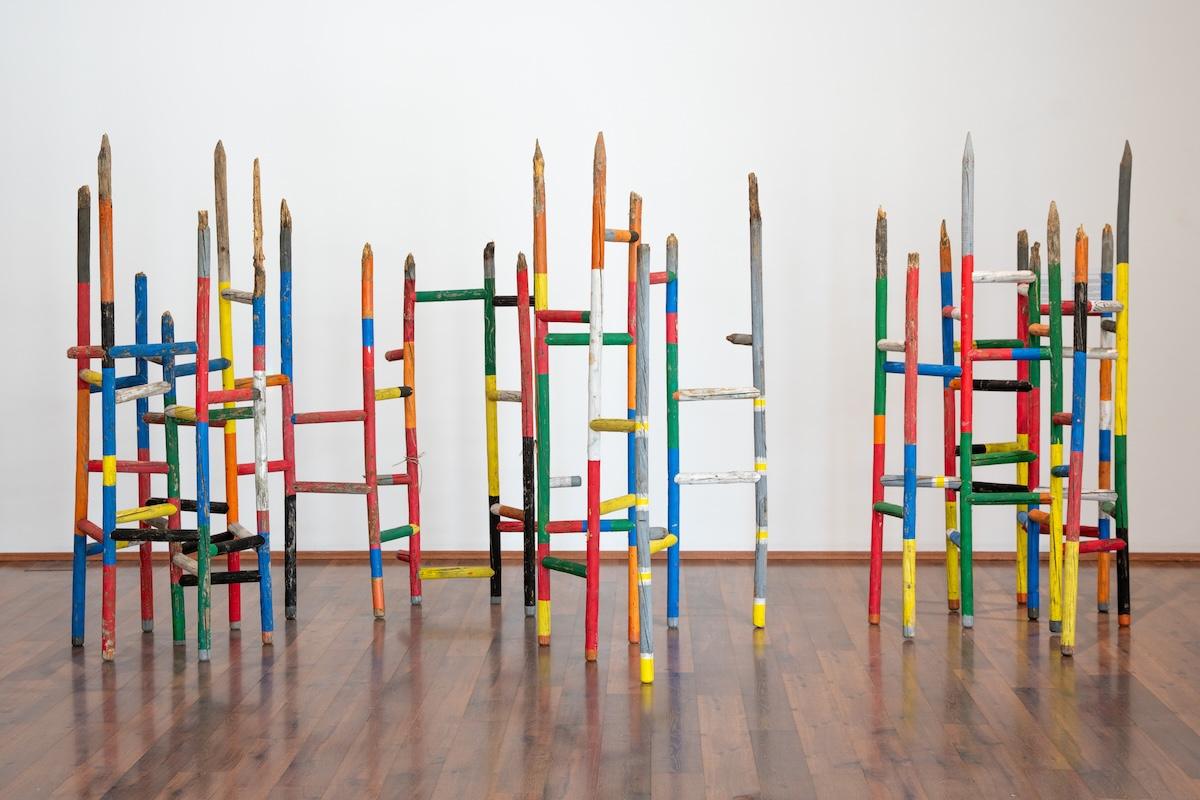
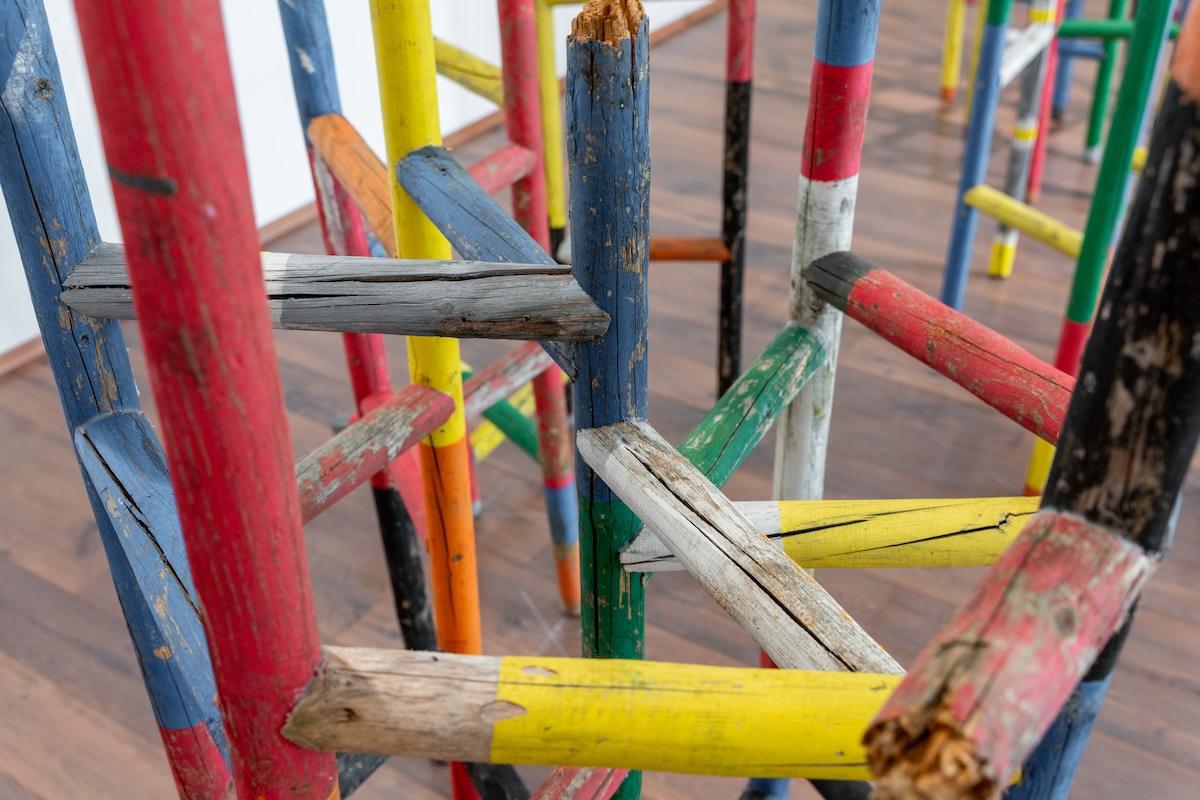
Slovak artist Martin Piaček, who grows an orchard in Rajka, Hungary, alongside his teaching practice at the Academy of Fine Arts and Design in Bratislava, has spent years exploring the relationship between sculpture, landscape, historical narratives and public space. Trained as a sculptor, he often reconsiders what traditional materials can do when they move beyond their original purpose. In Survey for a Dormant Orchard (A Few Notes on Land Ownership) (2024), wooden poles that once supported young trees in his orchard return as an installation that brings together material reuse, gardening and the human impulse to measure, mark and claim land.
The poles first appeared in Study for a Dormant Orchard, presented at Karlín Studios in Prague in 2018. Painted in basic heraldic colours, they marked out individual young trees overwintering inside the gallery. After the exhibition, they travelled to Piaček’s orchard, where they spent five years supporting trees as they grew and strengthened their roots. Exposed to the weather, they eventually began to rot and break. Piaček collected the old supports and connected them into a new sculptural structure, now resembling a complex organism. Accompanied by a chalk drawing that refers to trigonometry and surveying, the work considers how we define boundaries, assign ownership and relate to the land we cultivate.
A different kind of cultivation lies at the heart of Customers 4.0, a photographic series created by PARI feat. Anang Saptoto between 2020 and 2022. An artist, designer and activist based in Yogyakarta, Indonesia, Saptoto works at the intersection of ecology and social change, using collaboration and solidarity to explore how art can open up new possibilities. His practice encompasses environmental and human rights movements, as well as collaborations with children, schools, disabled communities and social organisations.
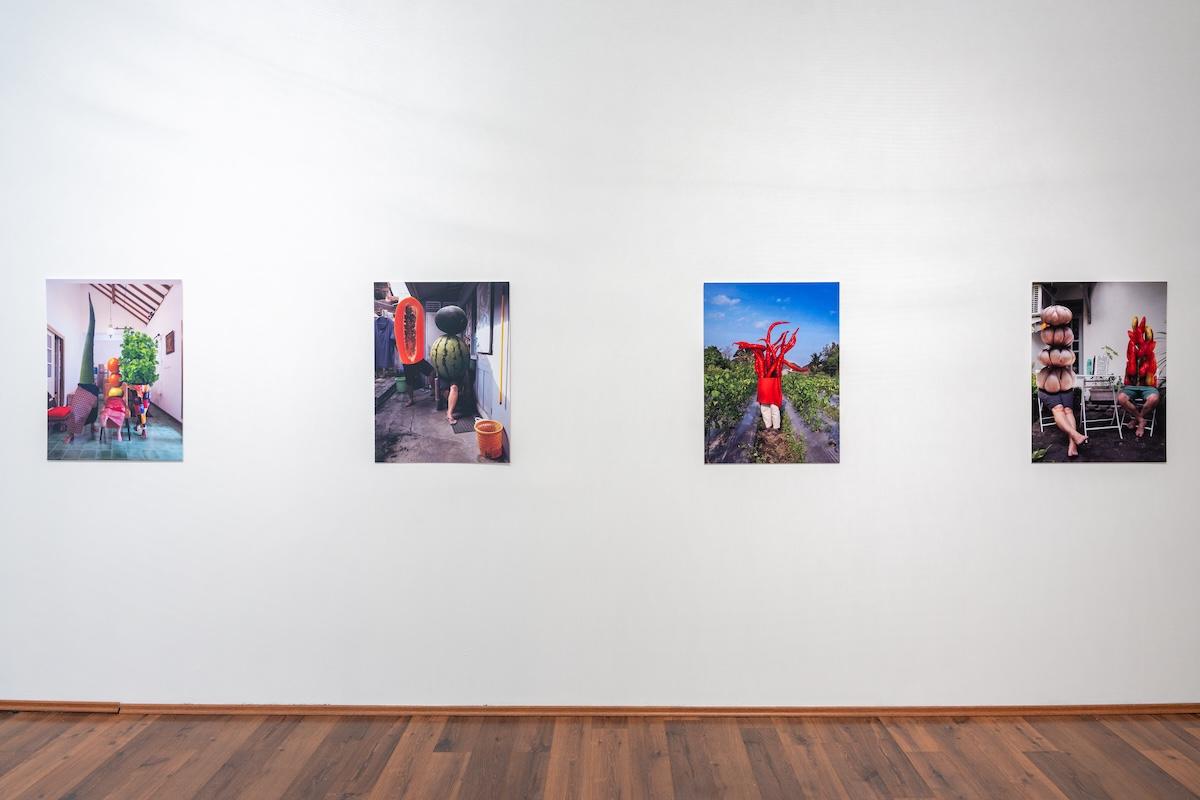
PARI, short for Panen Apa Hari Ini (What Are the Harvests of Today), is an art-and-agriculture platform Saptoto established in 2020 in response to the impact of the COVID-19 pandemic. Working with urban and rural farming groups in Yogyakarta, the initiative created a weekly electronic catalogue to connect growers with people who wanted to buy their produce. As part of this practical effort, Saptoto photographed customers receiving their orders and combined their portraits with images of the crops they had purchased. The resulting collages gradually took on a life of their own: first appearing in the catalogue, then circulating as collectible posters and eventually becoming an artwork exhibited in different contexts, from Indonesian villages and cities to international exhibitions.
One project follows the changing life of objects as they move between art and cultivation; the other reveals the people and relationships that sustain a local food network. We spoke with Martin Piaček and Anang Saptoto about reuse, land ownership, the passage of time, food sovereignty and the kinds of knowledge that emerge when art becomes part of everyday life.
The wooden poles in this work have had several lives: they were first part of a sculpture, then became functional supports for young trees in your orchard, and now return as an artwork. What did the orchard teach you about the difference between an object being made for an exhibition and an object being used in the world?
Martin: Yes, my poles had several lives already – artistic, functional and back to gallery space again. I am happy for such a long process, because art practice generally draws us toward constantly seeking new materials. This has been a multiple example of reuse or, even better, collaboration with the aura of authentic strong artefacts in my practice. It requires a different approach, a more subtle and affirmative one.
Customers 4.0 started as part of a practical food-distribution system during the COVID-19 pandemic and became a photographic project. What made you decide to turn the people receiving food into the subjects of the work?
Anang: The first thing to understand is that, from the beginning, I never intended to make the people receiving or buying food the subjects of an artwork. I took these photographs to document the process of Panen Apa Hari Ini (PARI), an art and agriculture project I have been running since 2020 as a way of fulfilling my social responsibility as an artist in response to the impact of the COVID-19 pandemic.
For almost two years, throughout 2020-2021, I published a weekly e-catalogue to help farming groups in both urban and rural areas of Yogyakarta promote their harvests. As the project developed, I realised that I needed to expand the network of buyers and increase people’s purchasing power so that the farmers could sell more of their produce.
One day, I had the idea of using photographs of customers as part of the e-catalogue’s promotional material. However, they declined because of privacy concerns. Meanwhile, my computer contained many photographs of agricultural land, farming groups working in their gardens, harvested crops, and customers buying the produce. This gave me the idea of cropping out the customers’ faces or upper bodies from the photographs and combining the remaining images with the crops they had purchased.
When I looked at the resulting collages, I felt there was something interesting about them. The photographs did not simply show people and crops; they brought the two together in a single image. I then shared the collages with the people I had photographed. To my surprise, they liked them and even asked for permission to share the images on their social media accounts.
Their response encouraged me to use the photo collages as covers for PARI’s e-catalogue. I had created a large and diverse collection of these collages. From that point on, more and more people became interested in and purchased produce from the farming groups collaborating with PARI. Interestingly, the idea of producing printed versions came from PARI’s customers themselves. They wanted to collect the collages. I eventually produced posters as PARI merchandise, selling more than 500 posters within two to three months.
So, my decision to incorporate customers into a photographic project did not originate from an artistic intention. It grew out of a practical need to support farmers and expand their network of buyers. Customers 4.0 evolved through this process, from documenting activities and experimenting with visual forms to responding to the people involved.
For me, this experience shows that an artwork does not always have to begin with the intention of creating art. It can also emerge from everyday practices, shared needs, and the relationships that develop among the people involved.
The stories behind these two works begin with practical questions: what can be reused, how can land be put to work, and how do we make the resources around us available to others? As their projects evolve, these questions lead to broader reflections on ownership, responsibility and the knowledge that develops through direct experience.
The work brings together gardening, surveying and land ownership. Why did you become interested in the act of measuring and marking land, and in the relationship between cultivation and the idea of property?
Martin: I purchased my future orchard from a person who was renting the land. It was originally part of a wider field, cultivated by a professional farmer to grow alfalfa for hay. Because of this, the actual boundaries had to be measured and marked first. The process revealed deep discrepancies between the long-time user´s claims and the “ideal”, perfect digital map. I have experienced this tension many times since: the friction between the old, habitual world in its customary borders, and the overlap of pure, but rigid digital measurements. I think it can make a good analogy to our situation in general, as we are facing technological, social and economic shifts faster than ever before.
And the interest in the topic of land property? That is a great and vast territory of questions and positions related to the law and the right, claim, privilege, access, inequality, responsibility, care – in fact a very big part of our lives.
By photographing both the customers and the crops they bought, you made visible the relationships behind an apparently simple act of purchasing food. What did you discover about the community around PARI through these portraits?
Anang: I discovered many things that go beyond what is grown and harvested. For example, how people make use of limited land in the densely populated city of Yogyakarta, transform vacant plots into productive farmland through collective effort, and build relationships with local government.
I also saw how these local practices can become a source of knowledge that others can learn from and apply elsewhere. Interestingly, these urban farming groups are putting climate action into practice. They may not be familiar with the term global warming, but what they do—from growing and caring for plants to making use of available land—is a concrete form of ecological practice embedded in their daily lives, without having to wait for government or NGO programmes.
For me, these portraits reveal that behind the seemingly simple transaction of buying and selling food lie social relationships, local knowledge, mutual cooperation, and the community’s efforts to sustain the environment.
In Piaček’s orchard, the passage of time has become part of the work itself. In Yogyakarta, the relationships documented through PARI reveal how local knowledge takes shape through repeated acts of growing, exchanging and caring. Neither project treats cultivation as an isolated activity: the surrounding environment and the people involved are essential to what the work becomes.
After five years outdoors, the poles are weathered, broken and partly decomposed. How important was it for you to let time and the life of the orchard become part of the sculpture rather than simply preserving the original work?
Martin: The time and life of the orchard mirrors our own lifespan. I clearly remember starting the orchard project and feeling deeply impatient from its fresh, stark “emptiness”. Then, the sudden realization struck me: by the time my trees will be fully grown, I will be much older and frail. Now, my trees are in their fine adolescent years and the orchard has shown me a lot of appreciation towards the present moments.
PARI brings artists, farmers, food producers and other participants into the same space. What can art contribute to a conversation about food sovereignty that other forms of activism or community organising might not?
Anang: I love art because it has its own unique and enjoyable logic. When used to communicate certain values, art is not only informative but can also be beautiful and enjoyed by many people.
In the context of PARI, I see art as a form of amplification: translating people’s feelings, enthusiasm, and hopes for change into a language that is poetic, unique, and open to collective learning.
Art may not be the primary driver of change, but through artistic action, it can become a generator or catalyst, working in collaboration with other fields such as agriculture, biology, forestry, economics, and law. Art can nurture a spirit of togetherness and shared values, allowing local practices to grow into collective movements and opening up possibilities for positive change, including influencing policies at the local level.
An orchard takes time. Its trees grow at their own pace, its wooden supports weather and break down, and the lines drawn on a map may tell only part of the story of the land. Food follows its own journeys, too, connecting the people who grow it with those who prepare it, sell it, buy it and share it.
The projects by Martin Piaček and PARI feat. Anang Saptoto invite us to look more closely at these everyday processes and at the relationships they make visible. One follows the changing life of objects as they move between art and cultivation; the other reveals how a practical food-distribution network can become a space for exchange, recognition and collective learning.
Together, they offer a glimpse into what Cultivators of Life is interested in: the many forms of knowledge that emerge from living and working with the world around us, and the ways in which small, situated practices can open up wider questions about responsibility, access and care.
Cultivators of Life: Growing Seedbeds of Knowledge, curated by Adelina Luft and Krisztián Gábor Török, is on view at MODEM – Centre for Modern and Contemporary Art in Debrecen, Hungary, until 31 December 2026.
Artwork information
Martin Piaček
- Survey for a Dormant Orchard (A Few Notes on Land Ownership), 2024
- Wooden poles, mixed media
- Variable dimensions
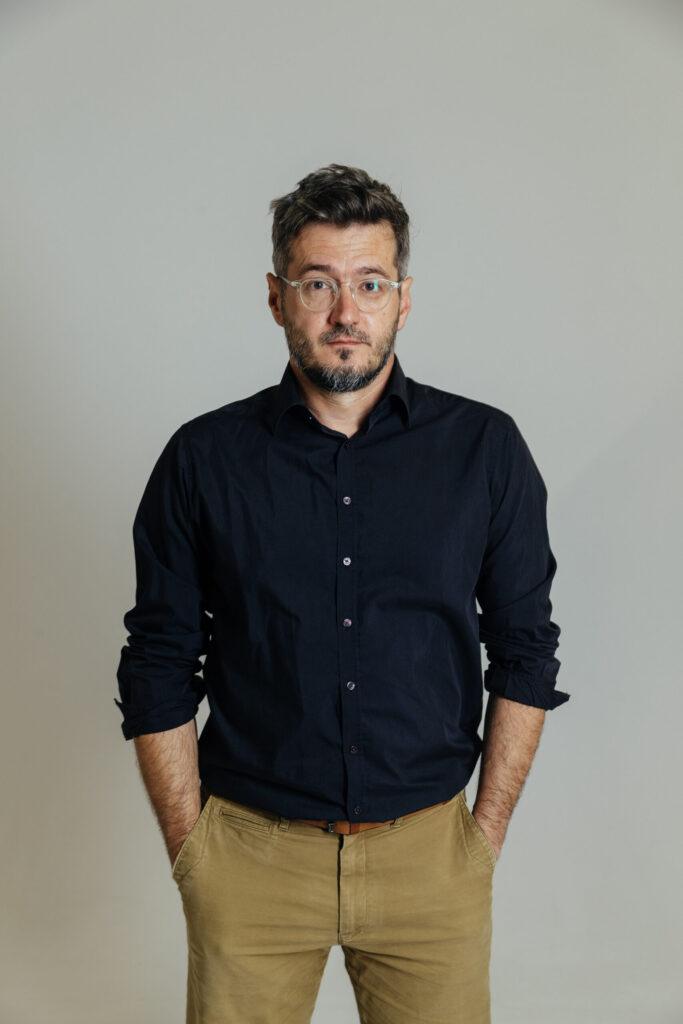
A Slovak artist growing an orchard in Rajka, Hungary, and teaching at the Academy of Fine Arts and Design in Bratislava. Trained in sculpture, his work uses a broad range of media and strategies, reconsidering traditional sculptural techniques and materials alongside historical narratives, public space, gardening and landscape.
The installation consists of wooden support poles from the artist’s orchard in Rajka, Hungary. Painted in basic heraldic colours, they were originally part of Study for a Dormant Orchard at Karlín Studios in Prague in 2018. There, still new and brightly coloured, they marked out individual young, dormant trees overwintering in the gallery. The coloured bands were intended to evoke warning marking systems or flags wrapped around poles.
After the exhibition, the poles were used in the artist’s orchard for their original purpose. For five years they supported young trees, helping them resist the wind and strengthen their roots. Gradually, the poles began to rot from below, break, and lose stability, so Piaček replaced them and collected the old supports.
The presented sculpture is the third and final stage of their use. The weathered poles are connected into a new structure that resembles a complex organism and, together with the chalk drawing, refer to trigonometry and surveying, as well as to human practices of demarcating and owning land.
PARI feat. Anang Saptoto
- Customers 4.0, portraits of PARI’s customers during COVID-19, 2020-2022
- Photographic paper
- 59.4 × 84.1 cm
- Indonesia Art Talk Anang Saptoto, 2024
- Video documentation
- 25 min 25 sec
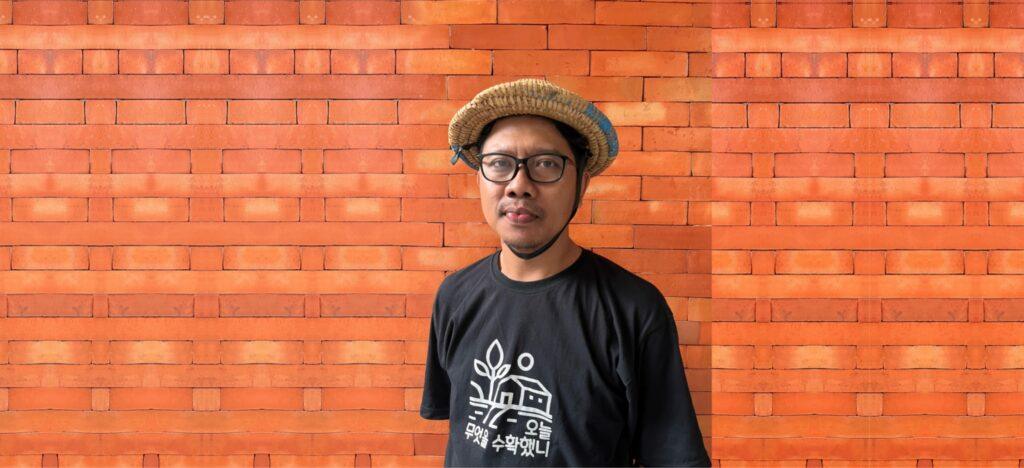
Artist, designer, and activist living in Yogyakarta, Indonesia. His practice focuses on ecology and social change, using art as a tool to question and open new possibilities through interaction, collaboration and building solidarity. He often supports environmental and human rights movements and collaborates with children, schools, disabled communities, and social organizations.
Customers 4.0 is a series of portraits created by artist Anang Saptoto as part of PARI (Panen Apa Hari Ini / What Are the Harvests of Today), a platform he created to connect art practices with farming in which every activity is developed in cooperation with artists, art students, food producers, farming enthusiasts, or anyone interested in food sovereignty and communal resolutions. During the COVID-19 pandemic, Saptoto photographed the people who purchased harvests from Yogyakarta’s urban farming groups, documenting them as he delivered their orders. He then combined the portraits with images of the crops and garden products they had purchased.
The portraits were initially used for PARI’s weekly e-catalogue, transforming a practical tool for distributing food into a space for artistic expression and recognition. The series was later exhibited in different contexts, from villages and cities in Indonesia to international exhibitions, and was reproduced as posters that customers could collect and display in their homes, rented rooms and small businesses.
By turning customers into subjects of portraits, Customers 4.0 makes visible the social relationships that sustain a local food network. The work documents not only who buys food, but also the connections between urban cultivation, consumption and the people who participate in keeping these systems alive during a period of profound disruption.