
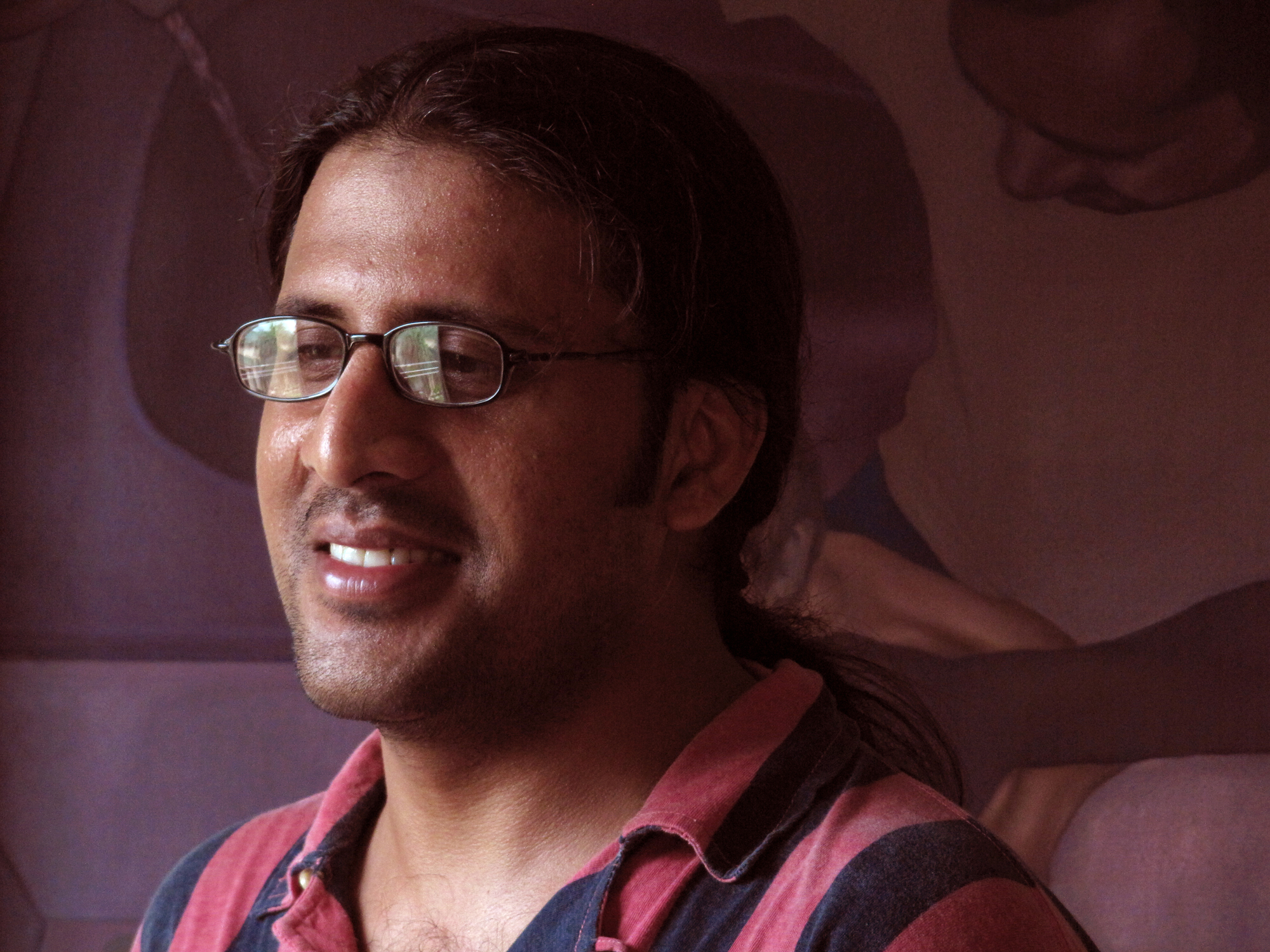
Photo by R.M. Naeem
The recent visit to the exhibition “The Shifting Gaze” at Celula de Artă, signed by Aqeel Abbas, functioned as a direct extension of the ideas articulated in this interview: a space in which “home” no longer appears as a fixed point, but as an unstable state shaped by movement, memory, and experience. Our conversation confirms that, for the artist, the idea of “home” is deeply influenced by the history of migration, by the personal experience of displacement, and by the tension between places. “Home” thus becomes a continuous process, an emotional and cognitive construct in constant transformation.
Together, the exhibition and the interview outline an artistic practice situated at the intersection of art and science. For Aqeel Abbas, the use of data and technological tools does not cancel out the aesthetic experience, but rather opens it toward other modes of understanding. At the same time, this approach raises questions about power: who is looking, who is being looked at, and how technology shapes these relationships.
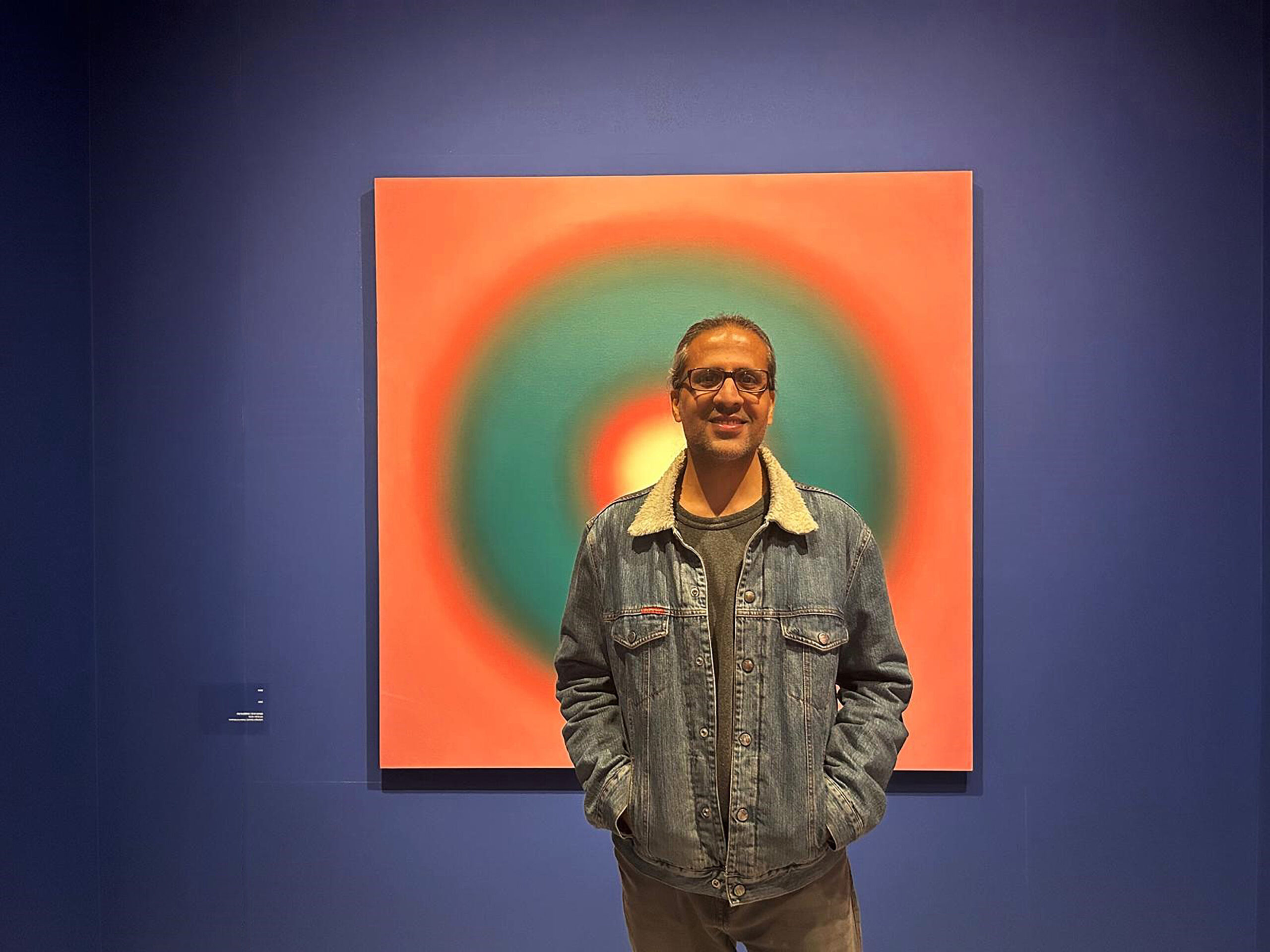
Photo by Aurelia Tymińska
In your exhibition, “home” appears more as a process than a fixed place. How would you define this internal transformation of what “home” means?
The partition of India and Pakistan in 1947 split one landmass into two nations. This division also entrenched separate ideologies, as people pursued a “true” home where they could practice their beliefs and keep their culture. Growing up, I heard many stories about partition, describing home as an unresolved question—whether it is fixed or always changing. This ambiguity grew stronger in the 1970s and 1980s, when many South Asians migrated for labor, especially to the Middle East. My father was part of this, spending much of his life away from both family and home. As a result, I felt disoriented by always moving between places.
The third and most recent turning point in this internal change came when I moved to Poland for my PhD research. Having lived here for over 2 years, I have already felt a major emotional shift. Constant movement—either physical or cognitive—can make you feel like you belong nowhere, or perhaps everywhere. So, my idea of “home” does not mean a fixed place. My artistic and emotional sides also resist rigid interpretations. I now see home as a transitory state. It keeps evolving, shaped by our emotions and the demands of daily life.
Your works suggest that perception is not neutral, but shaped by space and experience. When did you realize that “seeing” is already a form of interpretation?
Living in a post-colonial society adds diversity to one’s creative experience. The post-migration era also allowed artists here to experience their environment from a colonizer’s perspective. This added a new side to their creative work, with two opposing forces shaping space and experience. I became interested in this early in my fine arts studies. Texts like Ways of Seeing (1972) by John Berger and The Society of the Spectacle (1967) by Guy Debord strongly shaped my first views of society and culture. I began to examine my own experiences.
After graduation, I realized that life in a postcolonial space creates a liminal space. The space between places now seems more important to me than the places themselves. It shapes our memories and vision by joining two places and what lies between them. I refer to Homi K. Bhabha’s “third Space” concept. It is an intersection of hybridity, an ambivalent force between memory and place. I now think that moving between places causes tension—an intrinsic energy that shapes how we see the world. In this way, the physical space where we live—home or abroad—becomes less important. The liminal, transitory third space now seems most important. This view strengthens my sense of home as non-physical: a reality shaped by space and experience.
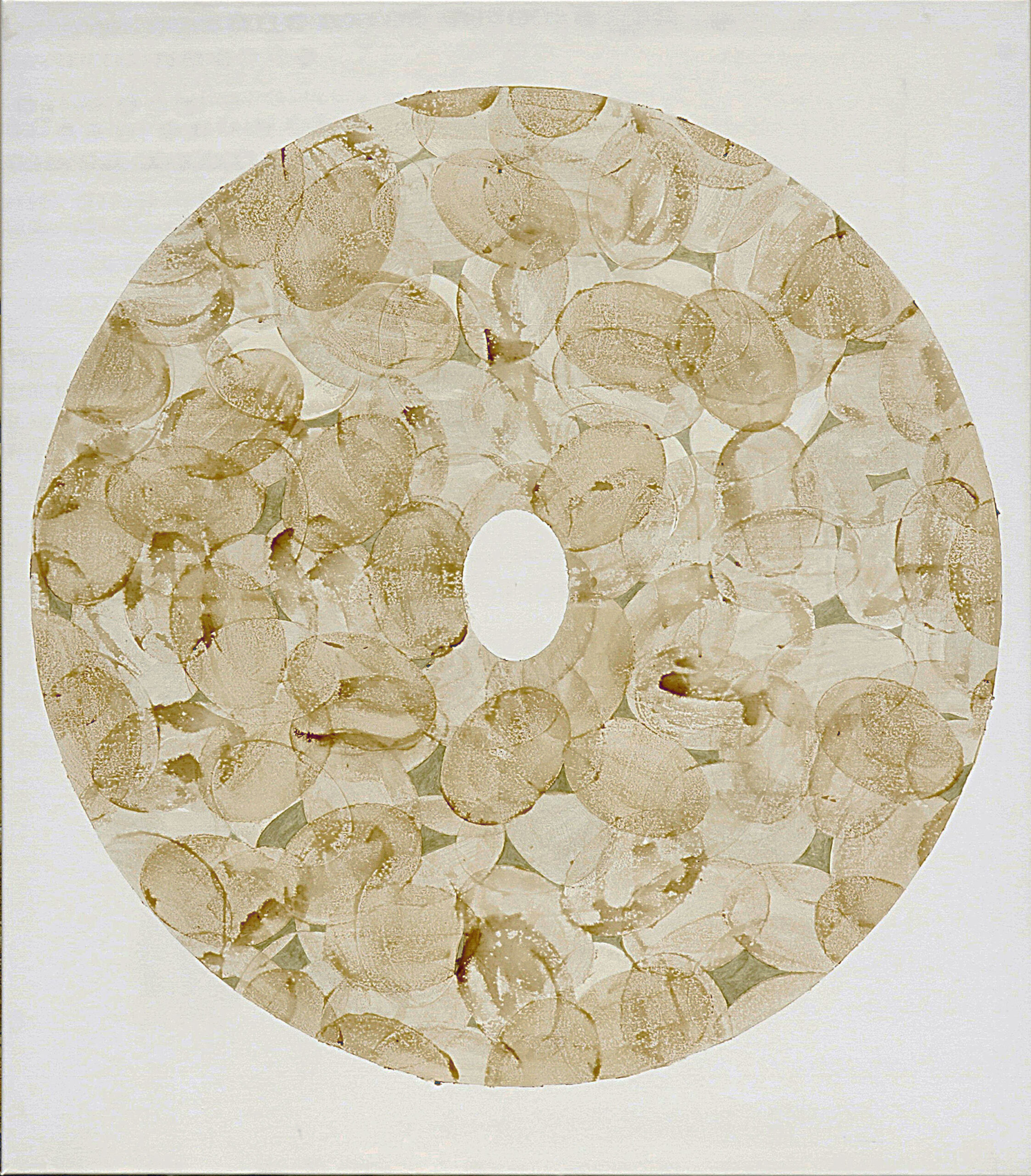
Blended I, photo by Andranik Sahakyan
The use of biometric methods introduces an scientific dimension into your practice. Do you think data can capture something authentic about aesthetic experience?
In 1999, neurobiologist Samir Zaki coined the term “neuroaesthetics.” This started major debates in the creative community about whether our aesthetic experiences are authentic. He suggested a scientific approach to measure how we perceive and respond to art. Unlike traditional judgment, this method examines how the brain, at the synaptic level, interprets images and creates meaning. This unusual viewpoint offers a new way to study perception more objectively. I discovered this concept about four years ago, while looking for sources for my PhD proposal. Before that, I found other approaches to aesthetic experience limiting. Neuroaesthetics changed my thinking. It drew me to the biological foundations of perception and prompted me to try scientific methods for artistic problems, regardless of how they compare to older ways. I see this scientific approach as just one pathway—not an ultimate solution—opening up new ways to understand art and perception.
Moving between cultures involves a constant renegotiation of identity. Do you feel your identity becomes more fragmented or more flexible through this process?
Moving between cultures can seriously affect one’s sense of belonging. It often creates a feeling of only partly belonging or being partly absent. This can fragment identity along social, cultural, and cognitive lines, making you feel caught in a “no-man’s land.” At the same time, it lets you discover hidden parts of yourself. Unfamiliar settings reveal new, dynamic, and sometimes unclear sides of personality. They offer chances to expand creative abilities and beliefs.
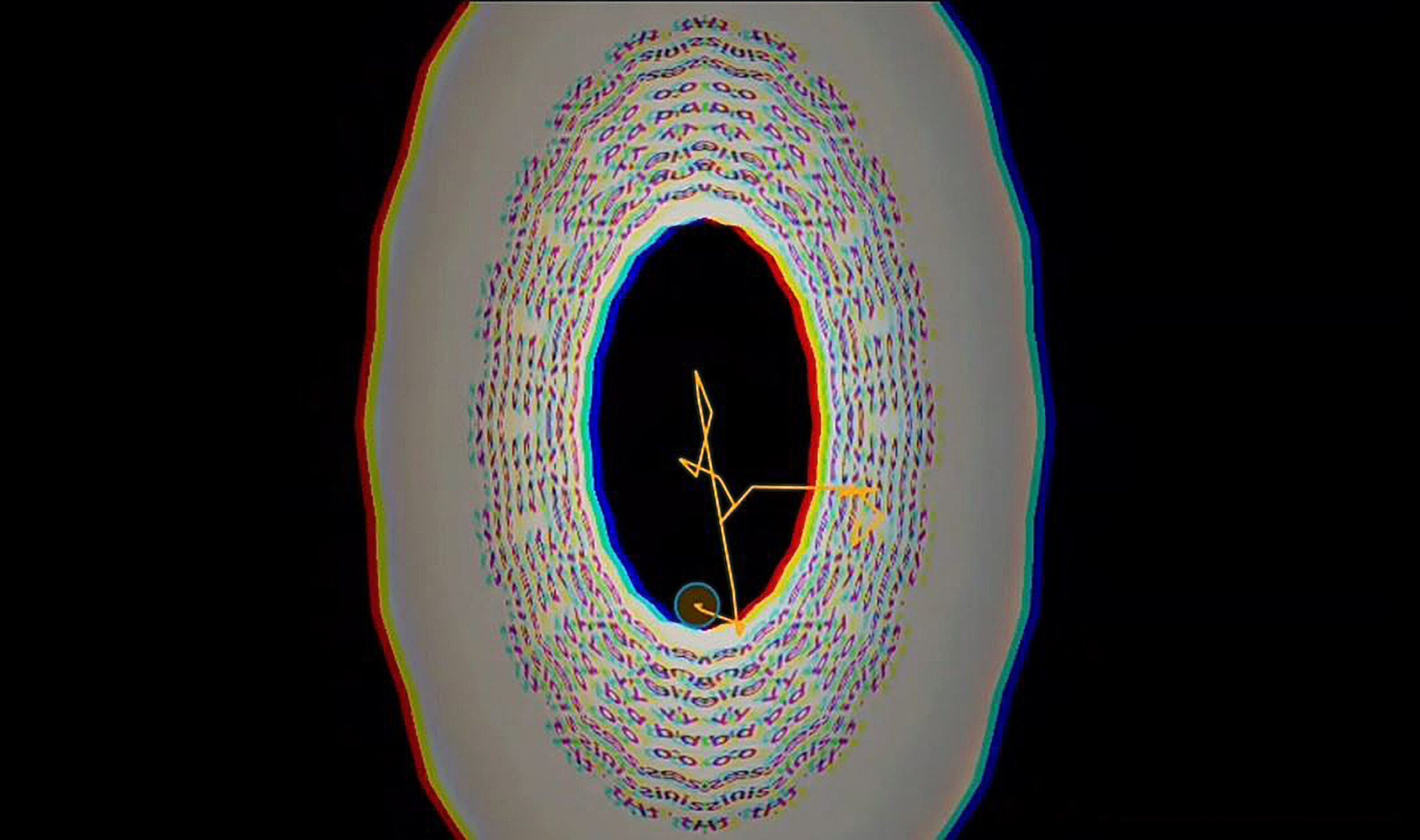
Photo from the personal archive of the artist Aqeel Abbas
The concept of “gaze” in your project also implies a dimension of power. Who is looking, and who is being looked at in your work?
The concept of gaze has always interested me in art. I remember reading Ways of Seeing (1972) and About Looking (1980) by John Berger, which influenced how I think about seeing and meaning-making. Władysław Strzemiński’s Theory of Seeing lectures from the 1950s examined how the eye and the brain work together. They explored how meaning comes from visual perception and wider knowledge systems. From the Camera Obscura’s early days to the idea of gaze, these themes have stayed important in contemporary art.
I think the gaze goes beyond passive looking. It lets us study how we perceive internally. New technology—like eye tracking—connects vision with the recording and real-time study of visual information. This brings up questions about who is looking, where the gaze is directed, and how it separates from the thing observed. In the end, the act of looking introduces power—shaped by access to technology and the ability to interpret scientific data.
There is a tension between subjective experience and the attempt to measure it objectively. How do you negotiate this contradiction in your artistic process?
This contradiction can be a methodological problem and sometimes disrupts research. However, it can be managed by creating a dialogue between emotional intelligence and the medium. When I use scientific tools in the lab, many subjective choices are now guided by the instruments and their processes. Technology not only sets the method but also shapes the creative inquiry. This calls for restraint—letting the tools guide and, to some extent, decide the outcomes.
In contrast, when I step out of the laboratory and engage with the data—often in the form of numbers and coded information—I reclaim artistic agency. Here, I draw upon creative freedom to interpret, transform, and materialize the work. Each tool and medium carries its own set of subjective and objective limitations; the crucial factor lies in how we, as perceptive and reflective practitioners, allow these media to communicate, intervene, and co-shape the final outcome.

To what extent does a change of place alter not only what you perceive, but also how you make artistic decisions?
The change of place certainly affects your ability to make decisions about your art practice, bringing both challenges and opportunities. This inquiry, in fact, involves multiple variables, including the degree of affiliation one maintains with their place of origin, the level of social and cultural acceptance experienced in a new place, and the availability of required resources or technological assistance along the way—many of which are particularly relevant in my own case.
This raises a central question for my research: how do artists make aesthetic judgments and establish coherence in their aesthetic preferences during processes of cultural transposition? Working in a place with scientific apparatuses requires ongoing engagement and the development of new methods of application. It is a somewhat fluid, lesser-known, and partially machine-centered way of creating artwork. So, I think all these variables actually contribute to shaping your decision during the process of creating an artwork. The novelty of the whole investigation lies in knowing the true meaning of our understanding of art and how we make artistic decisions as we move between places.
“Elsewhere” can be a space of alienation, but also of freedom. For you, is this in-between space more uncomfortable or more fertile?
Through the idea of a “third space,” identity can become fragmented—dispersed across multiple places simultaneously, as if existing within a multiverse. A close reading of my work would reveal two contrasting forces. On one hand, the liquid imprints—created using tea and coffee—appear fluid, random, and shaped by cultural context. On the other hand, the biometric lines and bio markers generated by eye-tracking technologies are precise, structured, and quantitatively measured. This visual tension between opposing elements articulates a dialogue between artistic freedom and scientific rationality; between emotional flow and mathematical limits; between rootedness and dispersion—being in one place, yet simultaneously everywhere. I find this in-between space a fertile, dynamic, at times, painful experience—one that is nonetheless generative and central to my artistic practice.
Fotografie de Aurelia Tymińska
Your practice seems to question the idea of a stable artistic identity. Do you think an artist should remain recognizable or constantly transform?
I would rather describe this as an evolving artistic identity. Throughout history, artists and art practices have encountered numerous inflection points that have significantly reshaped the creative discourse—from the invention of glass as a material to the emergence of the computer as a medium for scientific interpretation, and more recently, the rise of artificial intelligence as a relatively autonomous creative agent. These transformative moments have continually expanded our capacity to understand both ourselves and the world around us. This notion makes me more concerned about knowing this constant state of change—developing an awareness of the shifting mediums and minds, navigating the flow of information and inspiration, and critically examining and exercising my artistic beliefs within this ever-evolving artistic landscape. I am only trying to examine the evolving mechanism of artistic behavior and its effects on our creative practices.
If “home” becomes a mobile construct, is there still a point of return, or only a series of continuous transitions?
It is difficult to provide a definitive answer, as such a question may only be resolved once human evolution itself reaches completion. What can be proposed, however, is that the scientific limits of neurosciences—despite encompassing trillions of neurons—when confronted with the boundless nature of creativity, do not represent a simple opposition between two forces. Rather, they point toward a deeper acknowledgment of selfhood.
Our capacity to appreciate creativity remains incomplete unless we fully engage with and understand the processes through which creative experience emerges. This field of inquiry is still in its early stages, representing the beginning of a new domain of knowledge concerned with artistic experience and related cognitive and behavioral dimensions. Much remains to be explored before any definite conclusion can be drawn.