
Citește acest interviu în limba română.
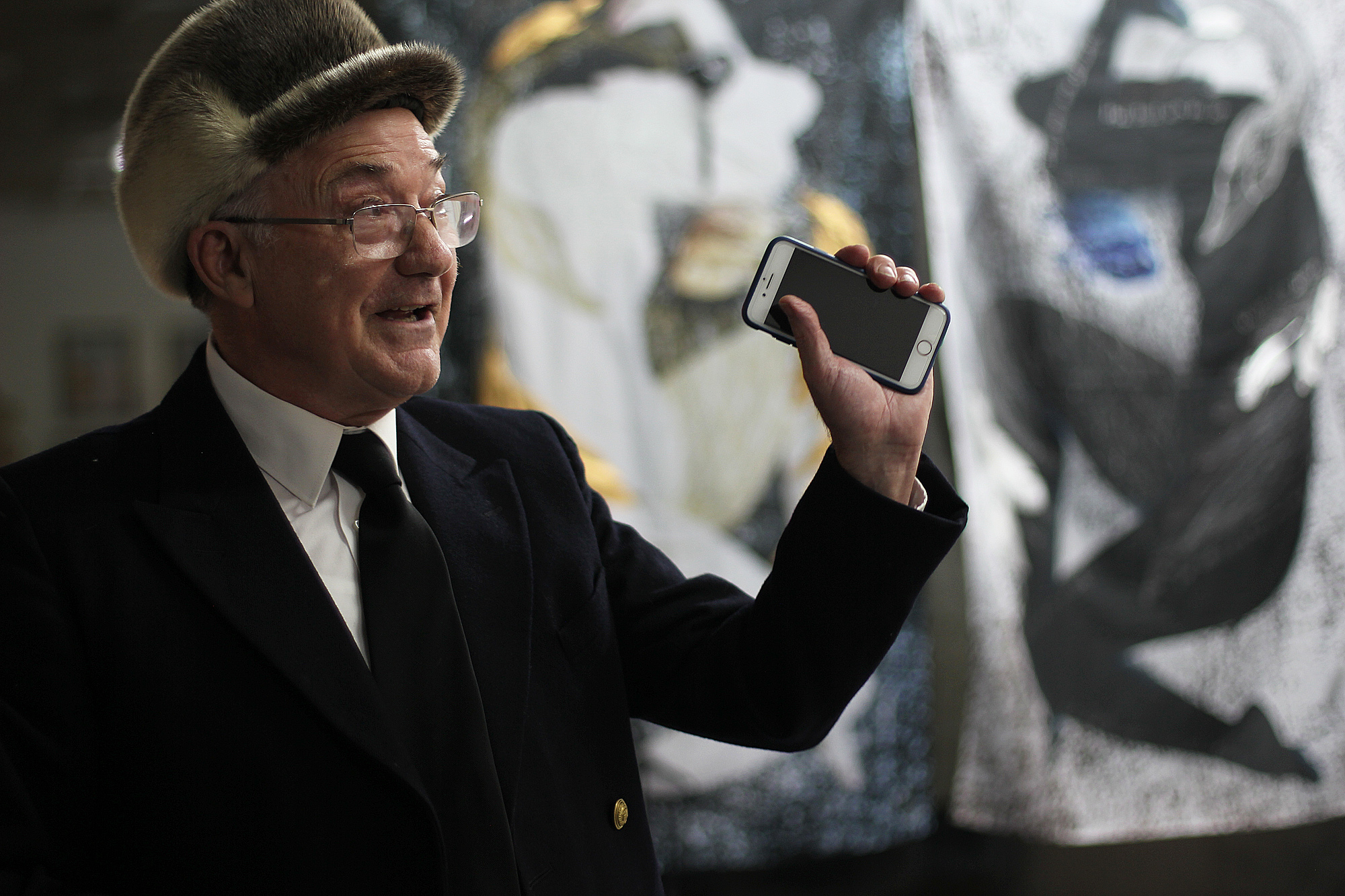
In September, the National Museum of Romanian Literature hosted an exhibition that intertwines dream and memory in a subtle dialogue: A Renegade Frame/O ramă renegată, signed by artist David Greenslade. Known as a poet, essayist, translator, and photographer, Greenslade has never considered himself a surrealist in the classical sense of the term. Nevertheless, his encounter with contemporary surrealism, mediated through international collaborations and a constant curiosity for language and image, has consistently shaped his artistic journey.
Presented as part of the Bucharest International Poetry Festival, the exhibition brought together images captured in Japan, England, Wales, the Middle East, and Romania—spaces that, through the artist’s lens, become territories of dream and expanded perception. Each photograph opens a gateway to another reality, an attempt to rediscover the extraordinary within the everyday, to transform seeing into a poetic act.
In a conversation sparked by this exhibition, I spoke with David Greenslade about the meaning of a “renegade frame”, about the connections between image and word, about memory, travel, and language learning as forms of intimacy with the world. The interview below explores how the artist conceives photography as a form of visual poetry—one that not only documents reality, but reinvents and expands it.
What does “a renegade frame” mean to you? Is it about rejecting an imposed framework, or about the freedom to create a new horizon of meaning?
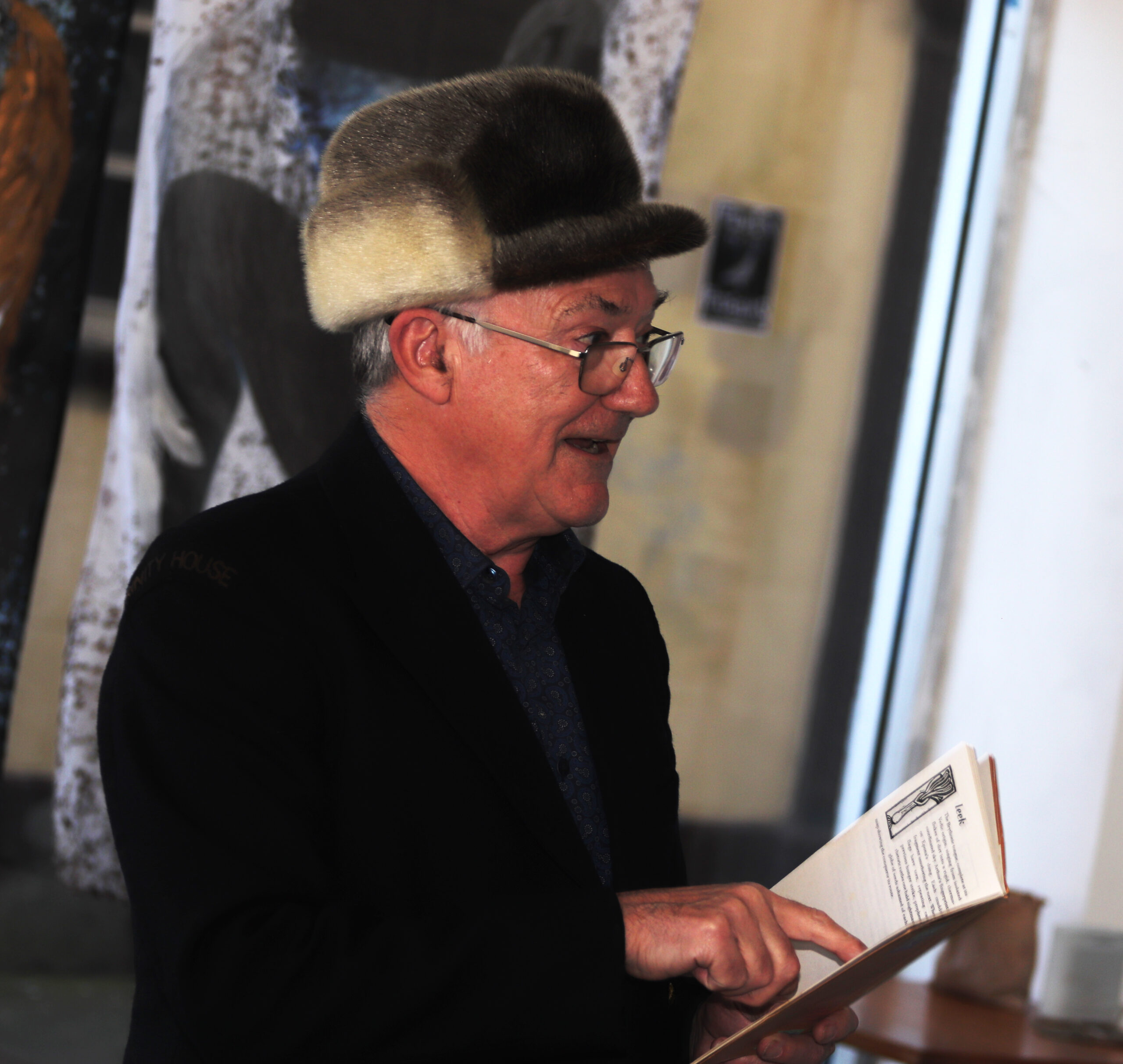
The word renegade here is positive and does not suggest disloyalty or betrayal. Because they are expensive I’ve often had problems finding frames for my work so I’ve had to look in unusual places. ‘Renegade’ refers to options such as outsider, forager, or even beggar – all benign. We see a lot in one day but rarely stop to react in a creative sense. My photographs try and reconfigure what we observe when we recall. The result, I hope, reminds us that the familiar can become amazing. A renegade frame.
Your photography has a surreal dimension that evokes both dream and memory. How does your art negotiate the tension between documentation and dreaming?
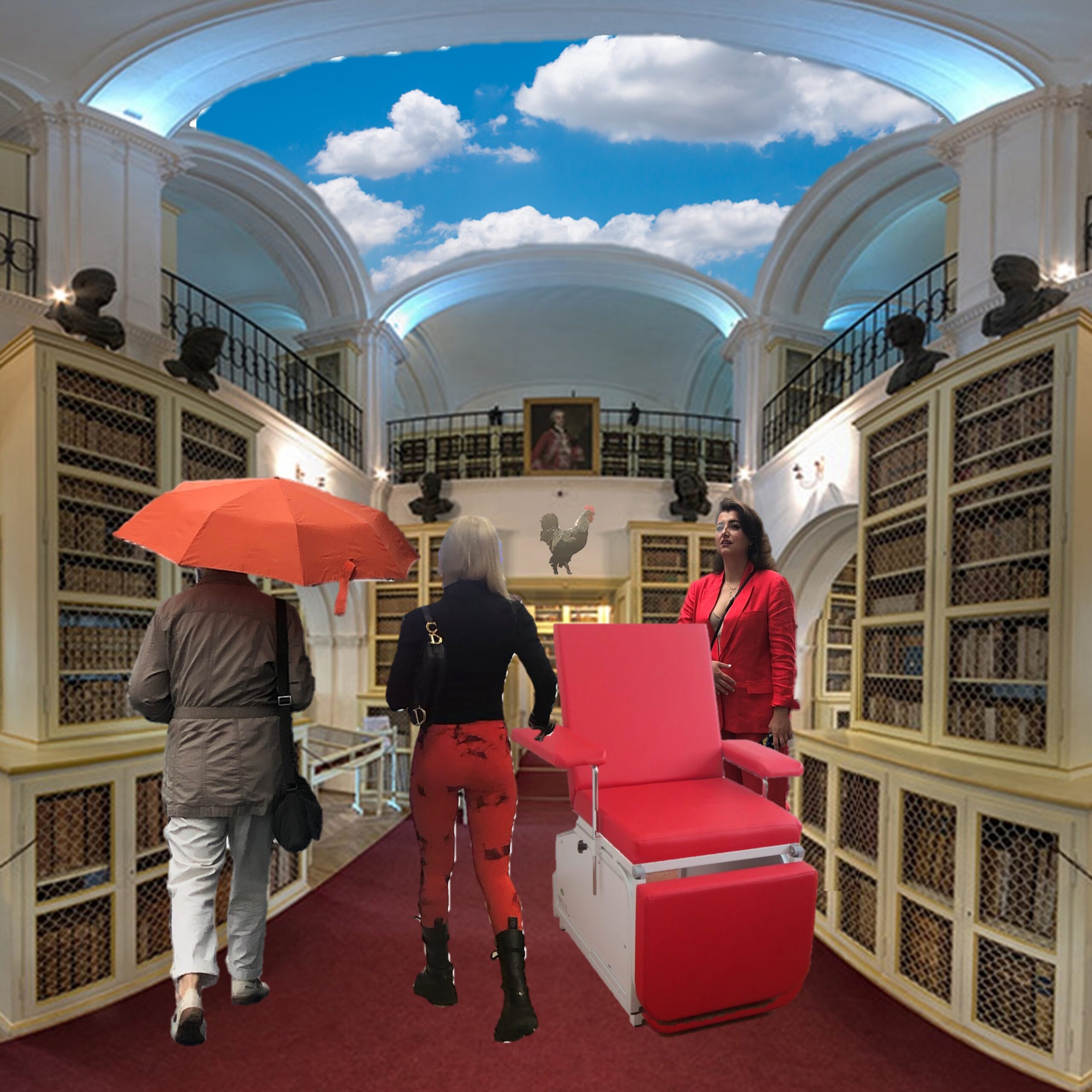
When it comes to dreams I’m very interested in The Overfitted Brain theory of Eric Hoe at Tufts University in the USA. Memory doesn’t only function later but also happens at the time and can (some claim) even recall the future. We can’t really anticipate what memory will treasure or discard. Francis Yates’ study, The Art of Memory details how the ancients used bizarre visual combinations as rhetorical memory aides. I am attracted by silhouettes, physical appearance and locations. I bring these factors forward as if into a memory theatre. Associations arise not from my intention but from the material itself. The surreal element or their sense of oneiric conundrum comes from what daily life cannot do e.g. fly, relocate, change, recombine, echo and so on.
For the exhibition at the National Museum of Romanian Literature, you captured images from Japan, England, Wales, the Middle East, and Romania. How do these places transform when filtered through surrealism?
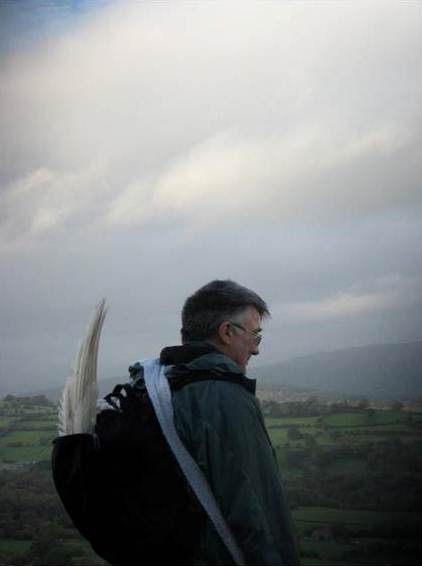
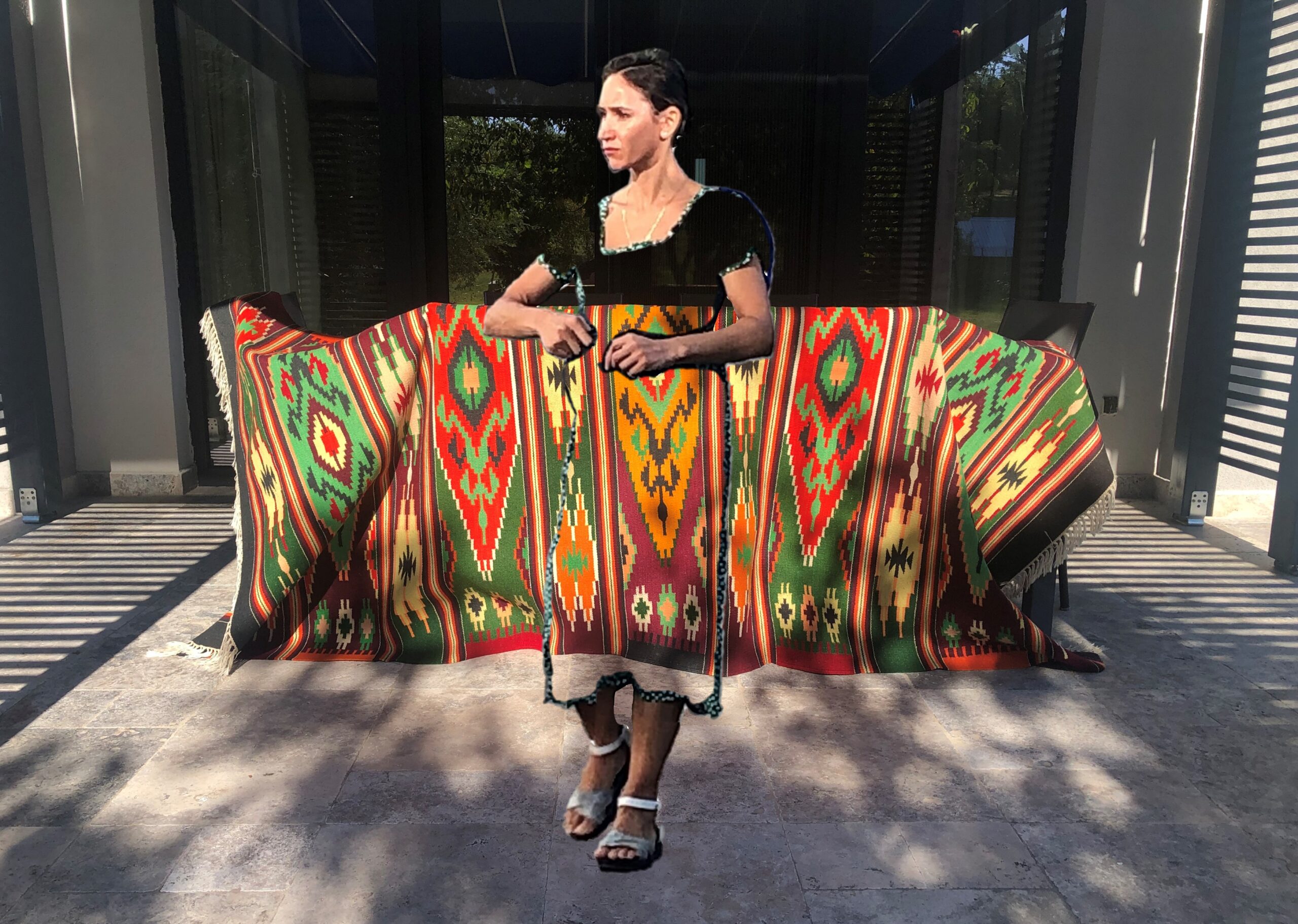
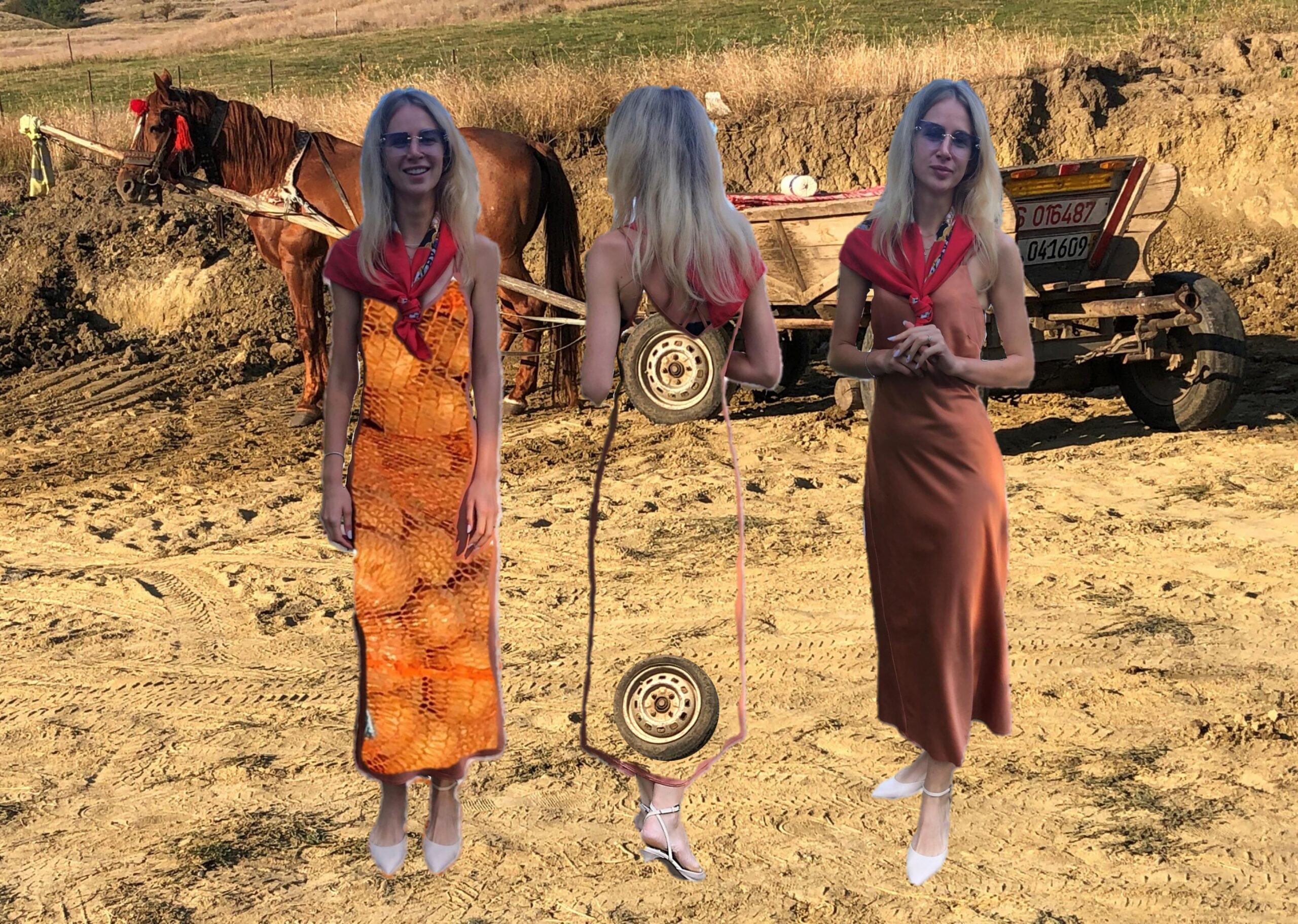
I’m fortunate to have these resources because I’ve worked in different countries. By learning the language (Japanese, a little Arabic and now Romanian)I gain entry to domestic and other guarded spaces that an outsider might not see. As a result I can juxtapose a Welsh workman with a Romanian lady. I can include a Chinese policeman in a country market (iarmarok). Locations and people can be transformed according to decisions offered by the material. I keep a collection of photographs on USB sticks going back many years.
In what way do you feel that the Welsh language, with its Celtic roots, influences your perspective on the visual world?
I am bilingual (Welsh English) and if I have a tendency towards introversion then it is in Welsh. I like singing and when I drive or walk alone I sing in Welsh (aloud) This brings me great joy and influences me much more than being too thoughtful or pensive. W B Yeats encouraged the myth of a twilight silvery Celtic mist. But my perspective usually features clear, sharp images. I think this is because when in Japan I studied Zen which tends to be decisive, even ruthless.
If language can be a form of inner landscape, how much of your photography “translates” this landscape into images?
I believe it’s reasonable to say that a writer’s tools require a slower pace. A visual image is immediate, direct, essential, while a poem is more oblique and associative. Alongside language there are a whole range of more immediate sensations including proprioception. The eye for example is phenomenally alert whereas formulating a poem takes time and is germane to art in a different way. Poetic ambition influences the way I take photographs especially when I risk disturbing the people I am looking at. When it comes to people I more or less steal their unguarded appearance which affects my (guilty) conscience. I like it when the world is caught off balance. A finished image often makes me laugh.
Critic Peter Sragher has spoken about the complexity of your artistic approach. How do you perceive complexity in your own art: as a challenge for the audience or as a form of profound clarity? Do you think art has the duty to make reality stranger, or more intelligible?
Some would say that art has no ‘duty’. I resist the trajectory from beauty towards ugliness. If I have a sense of duty I believe it is to remind us of the immediate, incredible factual miracle that the world actually exists. I believe we remain largely unaware of its astonishing, objective reality. What Buddhists call its ‘suchness’. I prefer simplicity but simplicity can be a challenging goal.
In the exhibition, there are both intimate and mysterious frames. How does intimacy relate to mystery in your creative process?
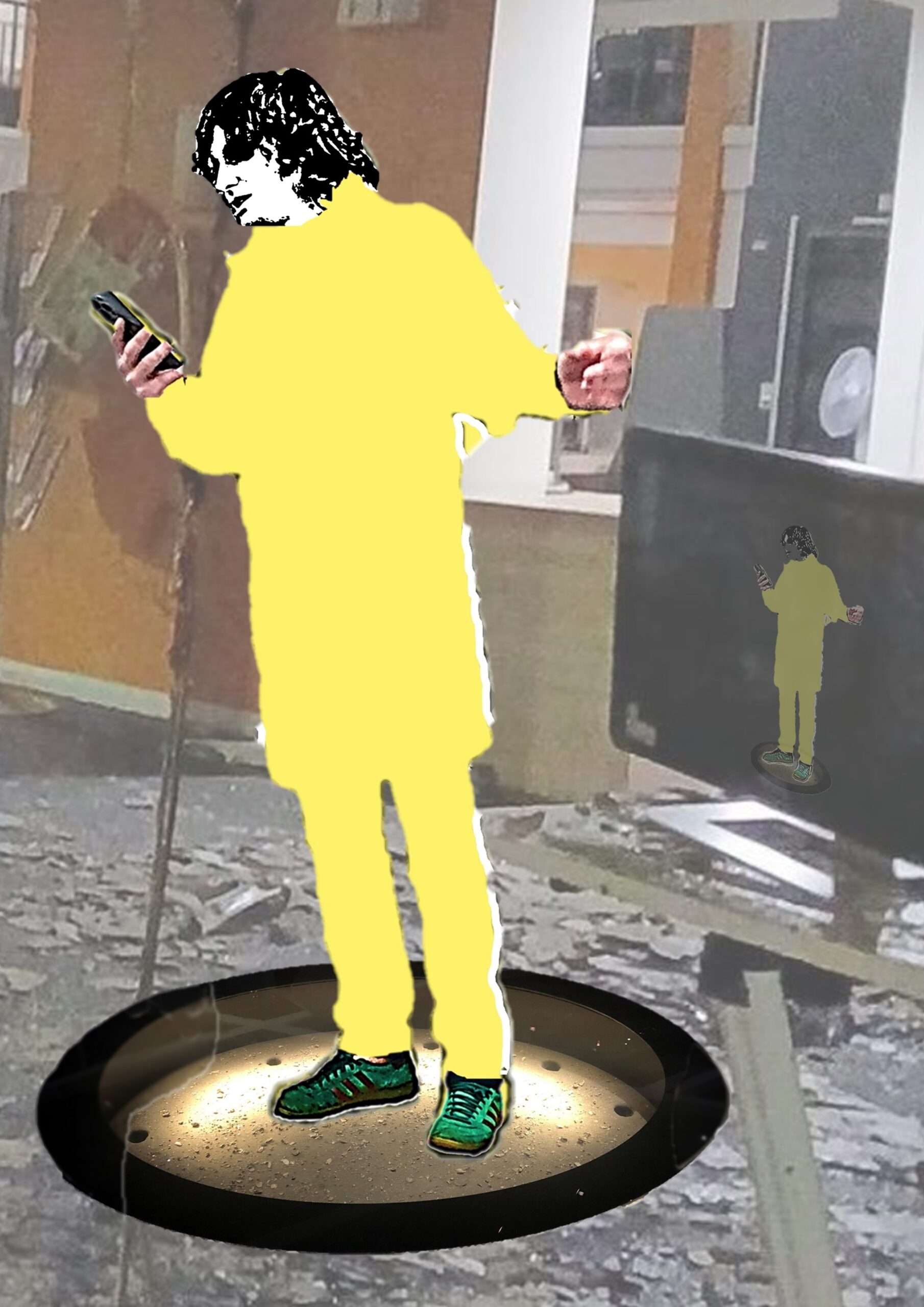
I was fascinated when I first heard of Mioritic Space. The work of Lucian Blaga was also a revelation. The idea of shared space (civic or domestic) is very different between East Asia, the Middle East and Europe. Being at home with a family in Japan, Oman and Romania, even between Eastern and Western Europe has been a wonderful education. This is why I’ve made it a priority to learn Romanian. Visual mise en abyme (Droste Effect or story within a story) also influences the way I make an image. Mise en abyme takes a story deeper into its own protected folds. I also include twins and reflections when the mood is right. Entering the lives of other people is radically different from remaining aloof.
Surrealism does not seem detached from the world, but deeply anchored in journeys and concrete geographies. How do the concrete and the abstract meet in photography?
I do not subscribe to the delusional or otherworldly fantasy approach to surrealism. I prefer the concrete shock of study, discovery and observation. Abstraction can take the form of juxtaposition without pushing things too far. I like my images to signal a fortuitous emotional narrative. The viewer imagines a story within a story of what the picture-frame shows; bringing in the new. Content suggests something beyond that boundary. Paul Ricoeur is brilliant on this.
If every photograph is “a gateway to another reality”, what kind of reality do you think today’s audience longs to cross into?
It could be that contemporary audiences have grown tired of gimmicks, special effects and relentless visual bombardment. Sometimes the eye just needs to calm down. I’m a student of Tibetan MikSang or Good Eye contemplative seeing. There is no separate reality but because of habits and the demands of ordinary life, we are cut off from perceiving the world with Good Eyes. I hope my work offers relief from visual fatigue. The feeling content of my visual work has been noted for its unusual effect and I’m happy about that.
In your artistic experience, how do image and word feed each other? What can photography reach that poetry cannot?
Reading and writing are more contemplative than listening to (say) birdsong at dawn, dancing or immersion in theatre. E M Cioran says (in The Trouble with Being Born) that ‘dead poetry is a poetry afflicted with coherence’. Coherence is not something that I pursue. Unlikely connections make images metaphoric but with a storytelling element. The presence of people is what gives a picture vitality. I do not crop the human form, figures are portrayed whole not as fragments. I want the complete person there from head to foot.
How would you describe the relationship between time and photography in your practice? Does photography stop, prolong, or reinvent time?
All three perhaps. Henri Cartier-Bresson’s concept of the “decisive moment” remains true. Luck plays a role and today we can shoot a hundred images in one burst whereas the early pioneers could only take one. I also make hand cut collage which has to be one-off and singular. I find that the quicker it happens the more immediate and successful the result. Struggling with material is often a sign that a work will not succeed. As for ‘prolonging’ Hans George Gadamer reminds us that there is a temporal dimension to a work of art. An artwork is able to interrupt time and open up what Octavio Paz calls the festive nature of aesthetic space. During ‘fiesta’ time itself operates according to different laws and so it is with visual art also a poem. Dream-time is similar.
Travel appears to be not only documentary but also initiatory. What have you learned about identity and alterity through this visual journey?
I agree that travel is initiatory while tourism is not. The traveler crosses thresholds and as well as being rewarded is often bruised by the encounter. These bruises are compensated for by deep-rooted experience. Language learning is similar. One becomes an infant – clumsy and naïve. A kind of liberating nihilism. Zen calls this ‘shoshaku jushaku’ (將錯就錯) which means ‘one continuous mistake’ but the mistake isn’t wrong it’s a form of perseverance. Alterity is not trivial and being reminded of it tames the habit of complacent duality. I try and infuse my pictures with the kind of commitment that children enjoy when they use imagination to create a world. There is no separation in a child’s mind.