
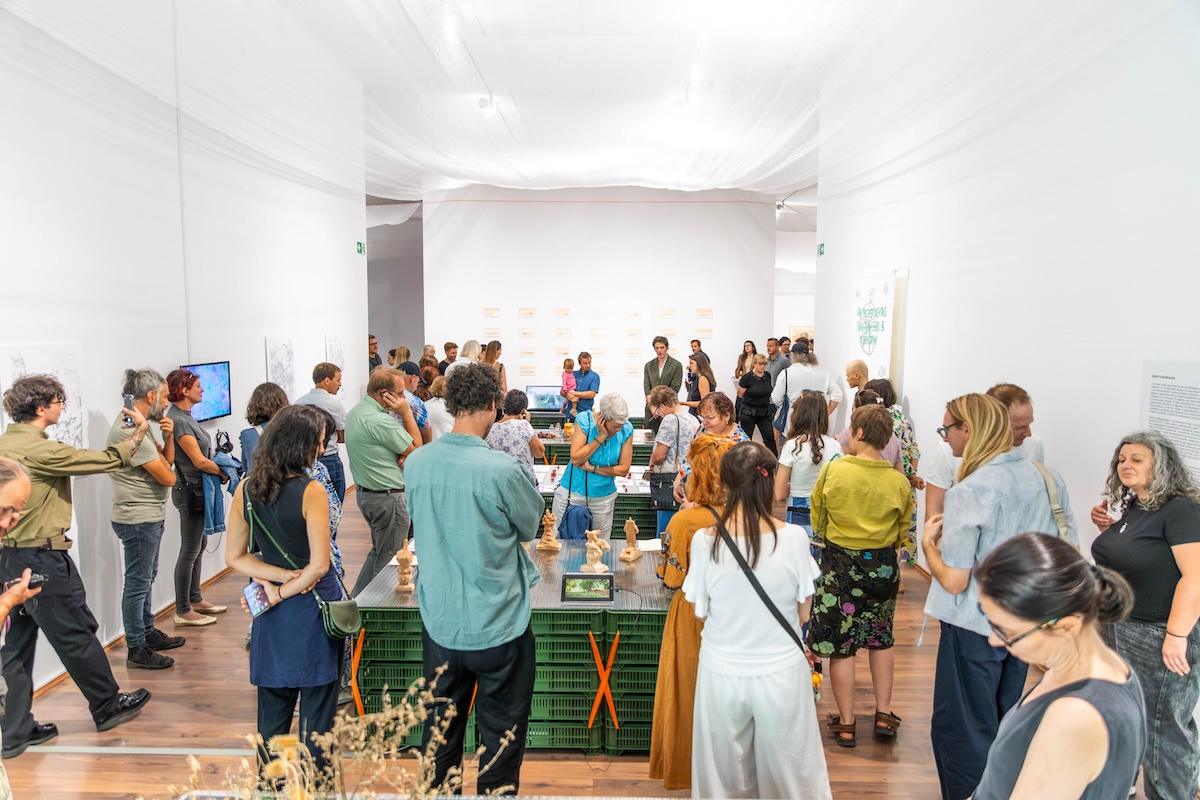
Aterraterra expo in Debrecen.
Can a forest exist in the space between two distant landscapes, brought together by the calls of birds? And what can pollen, seeds and traces left by animals tell us about a tree that disappeared centuries ago?
In the exhibition Cultivators of Life: Growing Seedbeds of Knowledge, these questions open up conversations about biodiversity, ecological memory and the complex relationships between humans and the environments they inhabit. At MODEM – Centre for Modern and Contemporary Art in Debrecen, Hungary, the exhibition brings together artists whose practices explore cultivation, natural cycles, environmental change and the ways knowledge is produced, shared and passed on. Curated by Adelina Luft and Krisztián Gábor Török, the exhibition invites us to look at nature beyond familiar categories and to pay attention to the many forms of interdependence that shape living systems. It can be visited until 31 December 2026.
Two of the projects in the exhibition approach these subjects through very different forms of research and storytelling. One begins with the sound of birds and the idea of a forest that stretches across geographical distances; the other follows the material traces of an extinct tree, bringing together scientific research, ecological history and cultural memory.
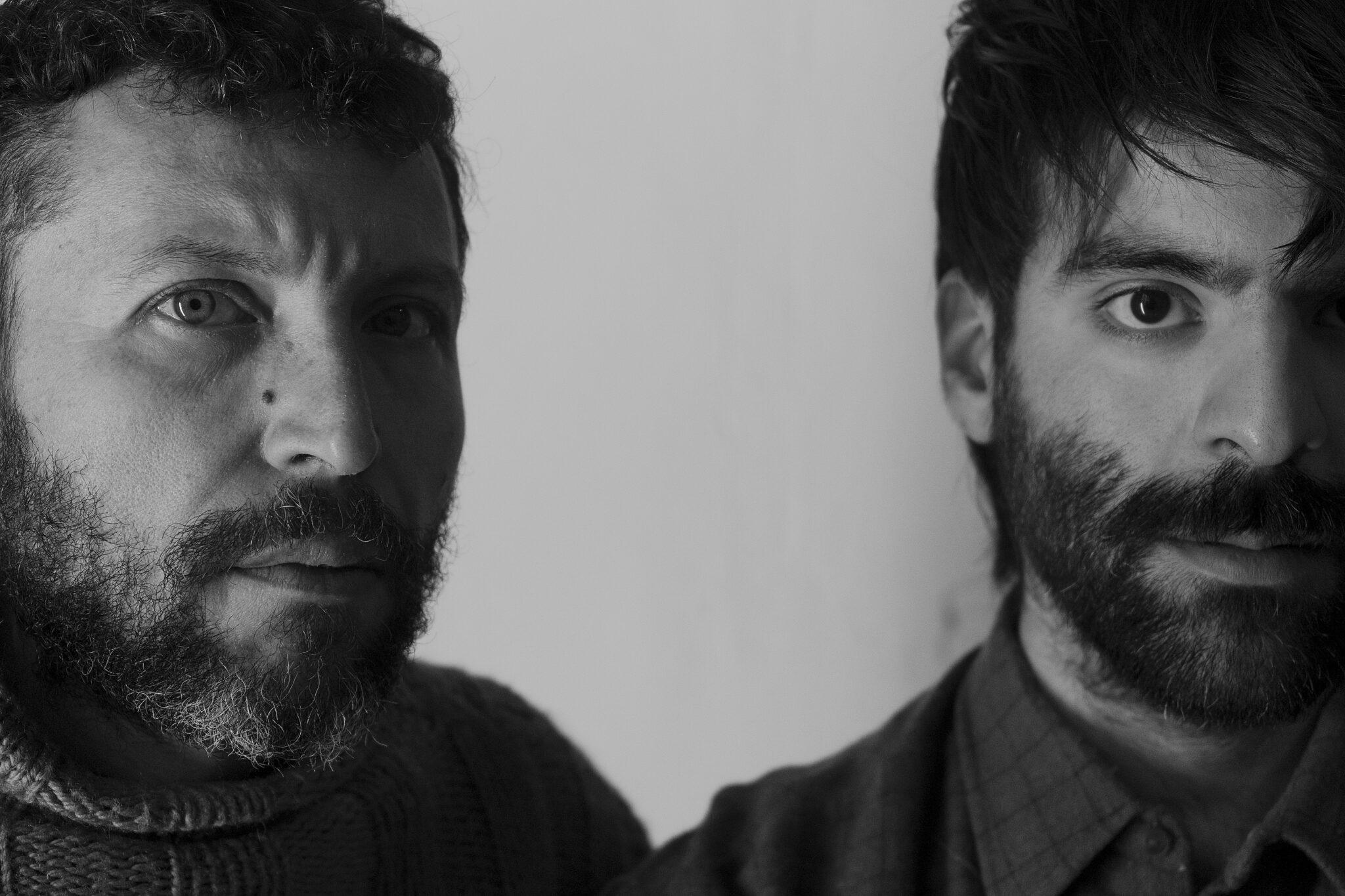
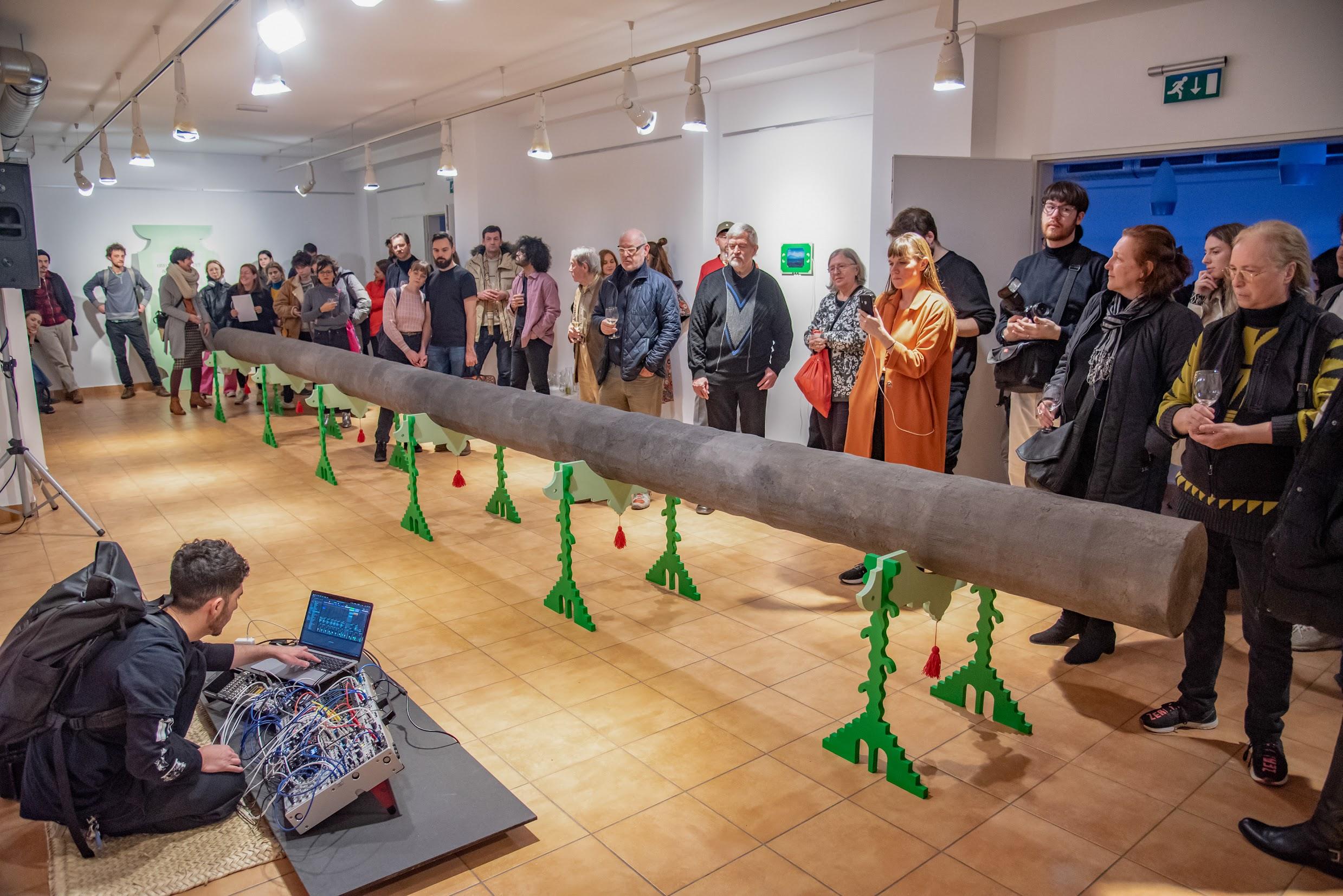
Based in Palermo, Aterraterra is an artistic duo formed by Fabio Aranzulla and Luca Cinquemani. Their collaborative practice investigates the relationships between humans, plants and other living beings, paying particular attention to the ways landscapes are shaped by ecological processes and human intervention. In The Greatest Forest (2026), a 24-minute audio installation, they bring together bird calls recorded in Debrecen and Sicily to construct an imaginary forest, one that exists through sound rather than geographical boundaries.
The work grew out of research into Debrecen’s Great Forest, a landscape that has been managed and transformed by human activity, as well as the migratory routes that connect distant ecosystems. Birds become guides through these overlapping territories, their calls revealing connections between places that might otherwise seem unrelated. The research also looks at plants such as Phytolacca americana, often labelled as an invasive species. By following the relationships between plants, birds, seed dispersal, feeding habits and human intervention, Aterraterra questions the boundaries we draw between native and foreign, natural and artificial. What emerges is a portrait of an ecosystem built on exchanges, dependencies and shared metabolisms, where the idea of a forest is inseparable from the many lives that make it possible.
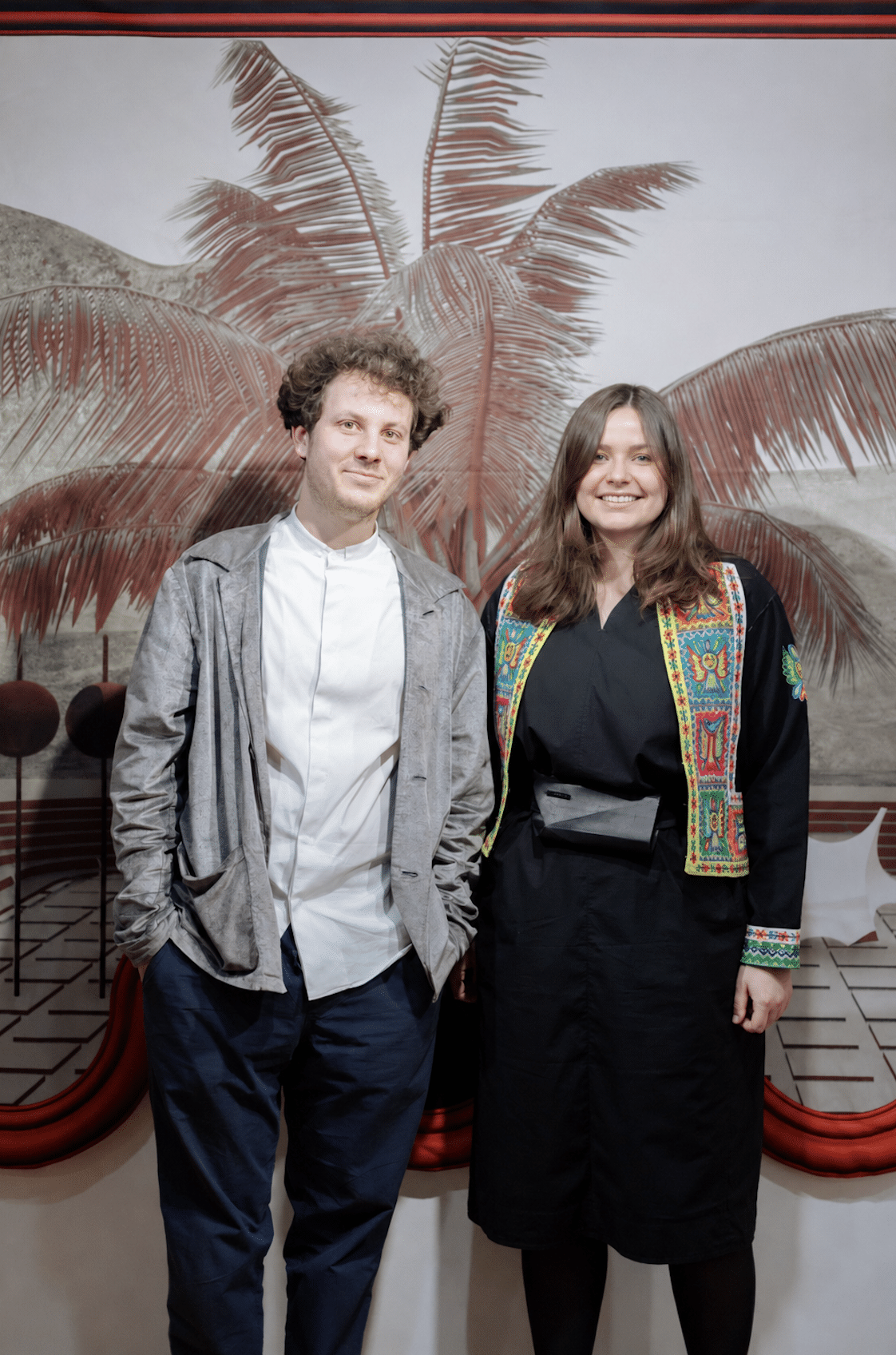
A different kind of ecological investigation lies at the heart of Pollen, Coconuts, and Phytoliths (2022–23), a large-scale, digitally printed textile measuring 400 × 180 cm, created by Fuzzy Earth, the Hungarian-Austrian artistic practice of Tekla Gedeon and Sebastian Gschanes. Their work explores the relationships between technology, ecology and more-than-human worlds, often combining artistic research with scientific knowledge and speculative approaches to environmental questions.
For this project, Fuzzy Earth turns to Rapa Nui, also known as Easter Island, and to the story of Paschalococos disperta, a palm tree that once formed part of the island’s ecosystem but is now extinct. Rather than treating its disappearance as a closed chapter, the artists investigate what remains: pollen preserved in sediment, coconuts bearing the marks of rats that fed on them, and phytoliths – microscopic mineral structures left behind by plants. These small material traces become clues through which an absent species can be imagined and its ecological history reconstructed.
The work brings together scientific research, the island’s ecological past and its cultural and ritual histories, opening up a speculative scenario in which the extinct palm might be brought back to life. At the same time, it raises questions about what de-extinction could mean, what kinds of knowledge are needed to understand a species beyond its biological characteristics, and how we relate to ecosystems that have been irreversibly changed. The textile becomes a space where scientific evidence, memory and imagination meet, making visible the fragile connections between a tree, the landscape it once inhabited and the people who continue to carry its history.
While Aterraterra uses sound to connect living ecosystems across distant places, Fuzzy Earth follows the traces of a species that can no longer be encountered in the landscape. Both projects ask us to reconsider how we understand nature, how we interpret the evidence it leaves behind and how human actions shape the lives and histories of other species. We spoke with Aterraterra and Fuzzy Earth about ecological memory, migration, extinction, interdependence and the possibilities of artistic research in a world where the boundaries between natural and human-made environments are increasingly difficult to draw.
Aterraterra
For this work, you brought together bird calls recorded in Debrecen and Sicily to create a forest that exists somewhere between the two places. What did listening to birds reveal about connections between landscapes that might otherwise seem very far apart?
Listening in both places led us to question distance as it appears on a map. We recorded the chaffinch in both: the same species, part of which migrates, with populations from the north and east moving south in winter. The nightingale, which breeds as far as Hungary, crosses the Mediterranean on its way to Africa. The marsh tit, instead, is resident. We also found Phytolacca americana in inhabited and cultivated areas and along roadsides, where birds eat its berries and carry its seeds. The work brings these birds together into one space, where voices from distant places call to one another in a dialogue we imagined: a forest that exists only in the work, but is built on real ecological connections. It asks what makes a forest: not a bounded territory, but a network made of moving birds and plants such as Phytolacca, shared metabolisms, human intervention and interspecies relations.
The work follows Phytolacca americana, a plant often described simply as “invasive”, but also connected to birds, migration and human disturbance. What changes when we stop looking at a species through the category of “invasive” and start looking at the relationships that allowed it to spread?
Calling Phytolacca americana “invasive” makes the plant solely responsible for an alleged “invasion”, and hides the humans who made its spread possible. It reached Europe in the mid-seventeenth century as a dye and ornamental plant, and it spreads through disturbed ground, from Sicilian gardens and fallow land to Hungarian forest plantations.
“Invasive” is one of many categories we use to simplify plants: cultivated, wild, medicinal, native, exotic, edible, ornamental. All of them are measured on a human scale: useful or harmful, local or foreign, ornamental or ugly. And they change with the historical period: before becoming “invasive” Phytolacca has been a dye plant, an ornamental, each label reflecting what the plant meant to humans at that specific period.
Every plant that arrives from elsewhere activates relations with organisms already there, yet Phytolacca remains “invasive”. But its berries are food for birds, which eat them and disperse the seeds. When we describe the plant as an important source food for birds that humans value far more highly than the plant itself, the label short-circuits, the simplification falters, and the relations it concealed come back into view.
Looking at relations changes the question: from how to stop the plant to which conditions, human and non-human, made its spread possible. The category “invasive” reduces the complexity of Phytolacca and of its interspecies relations, which go far beyond anthropocentric categories. Its ecological effects can be discussed, but as relations, case by case, not through a word that decides in advance.
You approach the Great Forest of Debrecen not as untouched nature, but as a landscape shaped by human intervention. How did this perspective change the way you experienced the forest during your residency?
Not much, because it is the perspective we already work from. We are used to reading the appearance of naturalness as a human construction: in our research, for instance, we study the genetics of cultivated plants, and how their supposed naturalness is an effect of human discipline. In the Great Forest this was easy to see: rows of trees, straight lines that were evidently planted, and areas being prepared for new plantings. Even its protection is a form of management: it is state-owned and administered. The idea of untouched nature is a human construction too, an elsewhere where the artifice is so sophisticated that, to anyone who doesn’t look closely, it disappears.
Seeing it this way does not make the Great Forest less fascinating. We actually spent a long time wandering through it and enjoying it. What we usually call nature is a montage that produces the effect of nature while camouflaging the signs of its construction, so that it looks untouched. This supreme artifice is perhaps one of the most common ways of constructing nature, and of preparing a landscape that can be perceived as natural as possible.
But the montage belongs to our idea of naturalness, not to the forest. The forest takes no part in these discourses, because it is made of organisms and relations that have no verbal language. Yet it is affected by our montages and our language: the way we construct the concept of nature absolutely impacts what is protected, managed, planted or cleared, and changes which species live there and how they relate.
Fuzzy Earth
Your work starts from fragments of a vanished palm – pollen, coconuts and phytoliths – and uses them to imagine an ecology that no longer exists. What can these tiny traces tell us that a conventional historical record cannot?
Our encounter with the extinct Rapa Nui palm began through scientific narratives, following researchers who attempted to reconstruct the island’s vanished forests from the smallest surviving fragments. Pollen grains buried in volcanic lake sediments, ancient palm fruits bearing the teeth marks of rats, and microscopic phytoliths – tiny silica structures that remain long after a plant has decomposed – all offer different glimpses into a world that no longer exists. We were fascinated by how these traces could reveal an entire ecological history. Pollen records preserve changes in vegetation across thousands of years, while a fruit holds evidence of an encounter between a plant and another living creature. These fragments tell stories that were never written down, recording the presence, interactions and gradual disappearance of forms of life. They remind us that landscapes hold memories far beyond human experience, embedded in their soils, sediments and geological formations.
What particularly interests us is how scientific knowledge emerges from these scattered remains, and how much still escapes our understanding. Even the image of Rapa Nui’s former forests has changed as researchers have discovered new evidence, revealing a more diverse and complex ecological history than previously imagined. The fragments make an absent world partially perceptible, yet they can never fully reconstruct the relationships, conditions and living processes that sustained it. This tension between what can be known and what remains irretrievably lost became central to our artistic investigation.
We became interested in the space they leave for imagination, uncertainty and speculation. And perhaps, in humanity’s growing technological ambition to resurrect extinct species, there is something worth considering about our difficulty in accepting that certain forms of life, and the worlds they belonged to, cannot simply be brought back.
The possibility of bringing an extinct species back to life sounds exciting, but your work also asks who gets to decide which species should return. What kind of responsibility comes with the technologies and scientific knowledge that make de-extinction imaginable?
De-extinction carries a seductive promise: that technological progress might allow us to reverse the consequences of ecological destruction. Yet a species is never an isolated organism. It emerges through relationships with other living beings, with particular soils, climates and ecological processes. Even if we could reconstruct the genetic material of an extinct palm, we could not simply resurrect the forest to which it once belonged. What would it mean to return a species to a world that has fundamentally changed?
Through our speculative resurrection of the Rapa Nui palm, we wanted to explore this tension between humanity’s growing technological capabilities and its responsibility towards the living world. Decisions about which species deserve to return, where they might belong and who would care for them are inevitably political. They concern the values of scientific institutions, the interests of those developing these technologies and, crucially, the communities whose lands and ecological futures are involved. Perhaps the greatest responsibility lies in recognising that the ability to recreate life does not free us from the obligation to care for the life that already exists.
Rapa Nui is often discussed through simplified stories of ecological collapse and human destruction. How did working with the island’s ecological and cultural histories complicate the story you initially encountered?
We initially encountered Rapa Nui through the familiar narrative of ecological collapse, in which the island’s inhabitants supposedly destroyed their forests and exhausted the resources that sustained them. Yet the more we investigated, the more this simplified story began to unravel. Archaeological and ecological research reveals a much more complex history of environmental transformations, adaptation and resilience, later shaped by colonial violence, dispossession and disease.
More recently, we met a woman from Rapa Nui, who lived on the island until her mid-twenties. She described growing up in a landscape of immense distances, where she could see the ocean from her home, smell the salt in the air and hear the waves, even though she lived far from the shore. She remembered walking kilometres to the nearest shop and spending time exploring the island on foot. Today, when she returns to visit, the increasingly dense development has transformed these everyday relationships with her surroundings. She can no longer sense its presence from her old home as she once did. Her memories introduced another layer to our understanding of ecological loss, one that is taking place within living memory.
While scientific research reconstructs the disappearance of ancient forests, the island is undergoing new transformations through tourism, construction and increasing demands on its limited resources. She spoke about the freshwater consumed by visitors at an increasing rate, not only for drinking but also for swimming pools and irrigated gardens, often leaving locals without a sufficient water supply. She expressed concern about growing cancer on the island, whose causes remain unclear. Her story reminded us that ecological loss can unfold quietly through the transformation of everyday life, when a familiar landscape becomes increasingly difficult to inhabit, recognise or even perceive.
Perhaps one of the most interesting things these two conversations leave us with is the idea that nature is made up of connections that often extend far beyond what we can immediately see. A bird call can reveal a relationship between distant landscapes, just as a grain of pollen or a tiny plant fossil can tell the story of a tree that disappeared centuries ago. Through sound, scientific research and artistic imagination, Aterraterra and Fuzzy Earth invite us to look at ecosystems as living archives, shaped by migration, exchange, loss and human intervention. Their works remind us that understanding the natural world also means paying attention to its absences, its hidden histories and the many forms of life with which we share it.