

Writer Tan Twan Eng. Photograph by Tommi Chu
Citește acest interviu în limba română.
My first encounter with Tan Twan Eng’s writing was also the moment of impact and the impulse that made me want to interview him — to learn more about the motivation behind writing a historical fiction novel such as The Garden of Evening Mists. It was a pleasant opportunity to gain deeper insight into how the author views the act of writing itself, how he relates to memory — both individually and historically — and the kind of drive I believe literature can offer to help us (re)connect with history and encourage us to explore and protect it, so we can remember it as it truly was, not as it is shaped by politically motivated narratives.
Tan Twan Eng is a Malaysian novelist who worked as a lawyer before fully dedicating himself to writing. He is the winner of the Man Asian Literary Prize, the Man Booker Prize, and the Walter Scott Prize. His novels The Gift of Rain (2009), The House of Doors (2024), and The Garden of Evening Mists (2025) have been published in translation by Trei Publishing House in Romania.
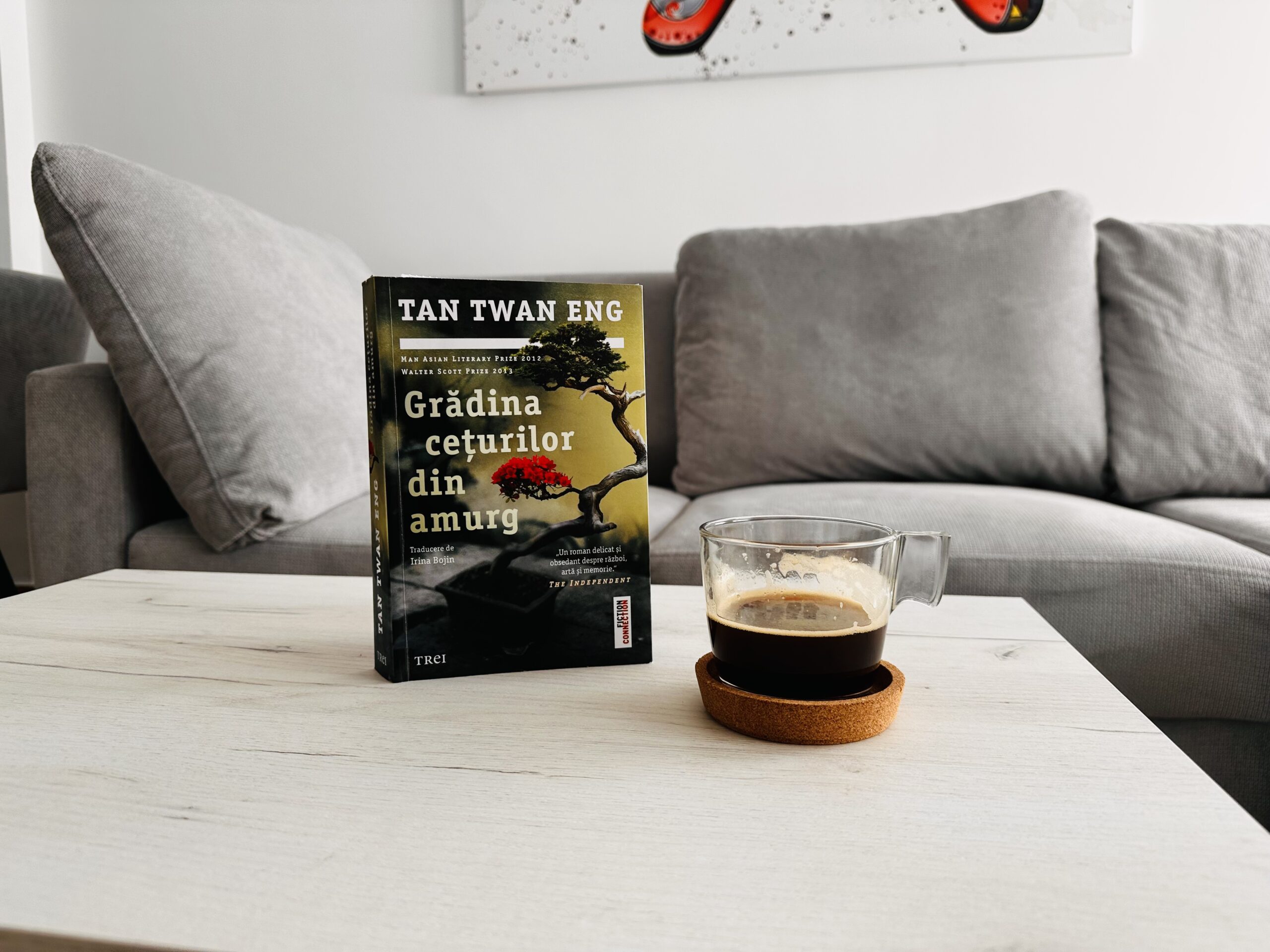
The Garden of Evening Mists was originally published in 2012, and has since been translated into about 20 languages, thus reaching various audiences from multiple continents and numerous cultures. Has your relationship with this book and its message changed over time, do you see it differently now that you have access to 13 years of readers’ impressions?
It’s difficult for me to judge my own work even before it’s published, it’s even much harder afterwards. And to re-evaluate it from across the span of so many years is complex. Even while I was doing book tours and literary festivals to promote ‚Garden’, I often had to read sections from it to the audiences, so my impression of it was already evolving.
I don’t re-read my books in their entirety, as I would only notice the flaws in my writing, and wish I had crafted the sentences more elegantly, especially in the months after they have been published. But over time you accept the flaws – what other choice do you have? But it does teach you to be a better writer. Even if I were given the opportunity, I am not sure I would rewrite the passages that I find unsatisfactory. A book is a marker of its creator’s journey. To go back and change it years later feels like cheating the reader; it ruins their own emotional resonations with that book. Remember the outcry when George Lucas made what he felt were minor changes to his original Star Wars trilogy?
And with how the publishing industry works these days, it’s much harder to ‘let go’ of your book, because you have to keep talking about it on the literary festival circuits. It’s really the most effective way of keeping your book alive, and I’m not complaining, because imagine how much more worse it’d be if nobody wanted you to talk about your books. And because ‘The Garden of Evening Mists’ had been adapted into a film, the film companies and the publishers have had me doing the rounds again to promote it when it was released.
I never place any ‚message’ or moral lesson in my books. I prefer to let my readers come to their own conclusions. I detest books where it is obvious that the writer is trying to preach to me, or has some unsubtle and oh-so-fashionable agenda to shove down my gullet. Very often I don’t bother to read more than a few chapters that sort of books. So whatever changes in the message ‚Garden’ might have are all dependent on the changes in the readers themselves. I am, however, surprised and much gratified by how deeply the book has resonated with readers from around the world.
I’m not interested in writing books that are timely; rather I want to write books that are timeless. Nothing ages a book faster than a writer trying to cling desperately onto the latest trendy issues.
Has anything changed for you – as human and writer – or for the book itself after The Garden of Evening Mists became the inspiration for the 2019 film?
Everyone and everything changes with the passing of time. I was pleasantly surprised by how good the film is, because I wasn’t happy with the early drafts of the script, and I bluntly made that clear to the producers. Just recently I had to watch it again recently in preparation for a talk I was giving, and I was very charmed that it didn’t seem to have aged at all.
The film exposed my book to a wider audience, to people who were not fervent readers. And in turn it led them to my other books. Thanks to the film, I also became good friends with the film director Tom Lin, and a few of the actors: David Oakes and John Hannah and Tan Kheng Hua.
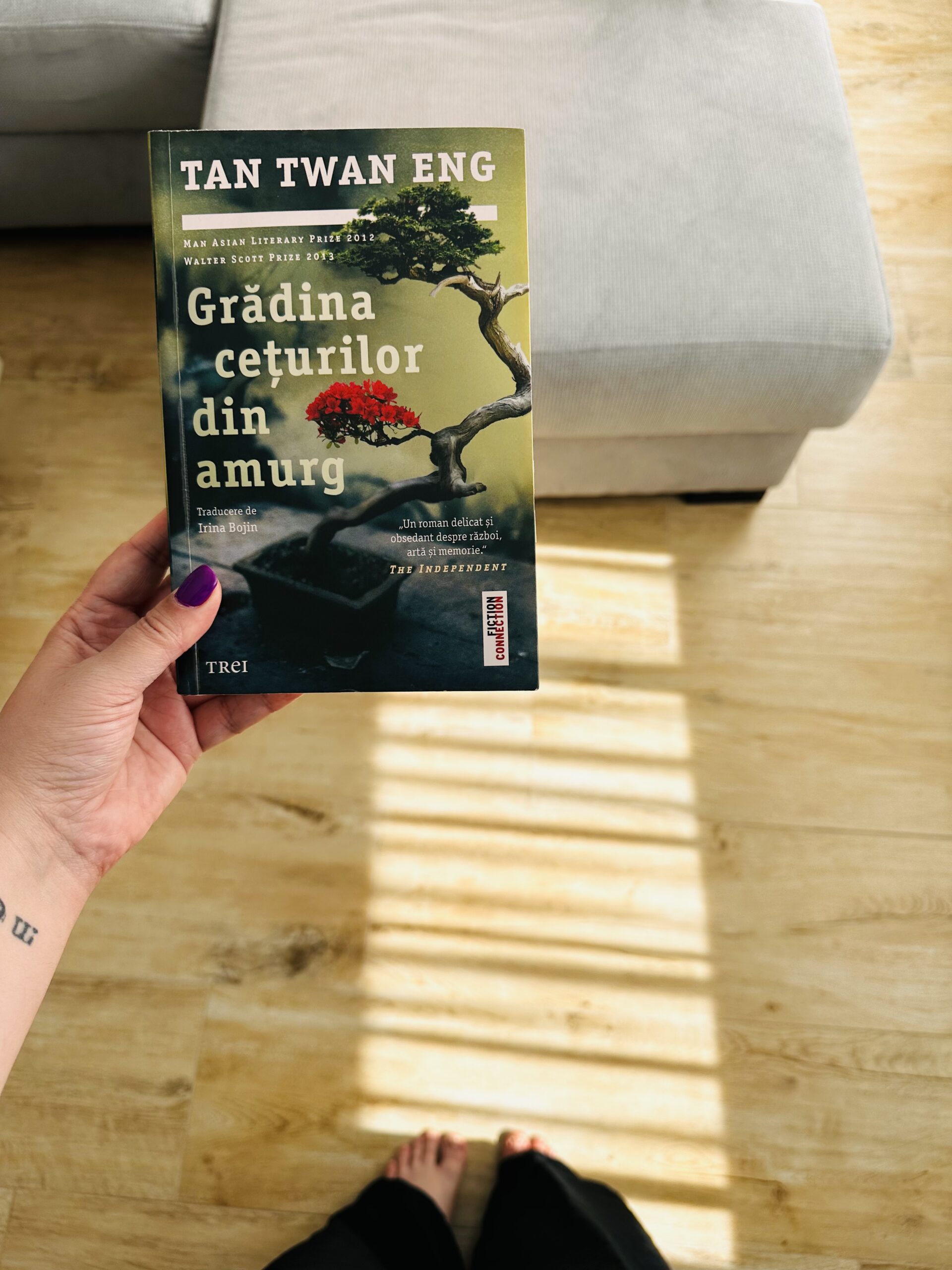
The Garden of Evening Mists, as I’ve read it, is a book of contrasts that need to coexist – it is a perpetual and sometimes dark and painful dance between past, present and future, between the victim and the oppressor, the light and shadows that are shaping realities both at an individual and at a historical level. Was it all intentional or did it just occur as a consequence of your character’s intricate lives?
There’s a scene in the book where Aritomo, the gardener, reveals to Yun Ling how contrast works in creating the illusion of light and shadow in his design of a garden feature. One has to learn to balance the contrasts in one’s life, and this I learned when I was researching Japanese gardens. It was also a lesson I discovered via my years of training in aikido, a Japanese martial art.
Contrasts are also important in writing a book: one needs variation in pace, tempo, mood, scene-setting, and dialogue, otherwise the book will be monotonous. These contrasts are even more essential in a book about garden designs and aesthetics, as I was adamant that the reader should experience the sensation of actually wandering through a garden.
We can also talk about memory and its decline, about losing the tools associated with language, thus losing oneself, perhaps even losing a slice of the objective history since there’s no individual to recall it and seek compensation or revenge. Teoh Yun Ling starts writing specifically to avoid the permanent effects of memory loss and this is also one of my biggest fears, my family has a history of neurodegenerative diseases. If my curiosity is not getting too personal, I was wondering whether you could tell us about your relationship with memory and the permanent threat of randomly losing it we all face.
The losing of one’s memories is some of a writer’s greatest fears, because we rely on our memories not only for our material, but also for our indivdual ways of expressing our thoughts and ideas. Of creating a literary work. When I was younger I prided myself on my superb memory. But as I grow older I find that these powers are weakening.
I’m fascinated by memory: the way we remember, interpret and revise memory makes us human. Milan Kundera said: “Man is separated from the past (even from the past only a few seconds old) by two forces that go instantly to work and cooperate: the force of forgetting (which erases) and the force of memory (which transforms).” This transforming force of memory: People view the past in various ways: with dispassion, with sentimental longing, or with hatred. Nostalgia is just one way of how one chooses to do deal with one’s memory. In The Garden of Evening Mists Yun Ling, the narrator says, ‘For what is a person without memories? A ghost, caught between worlds, without an identity, with no future, no past.’
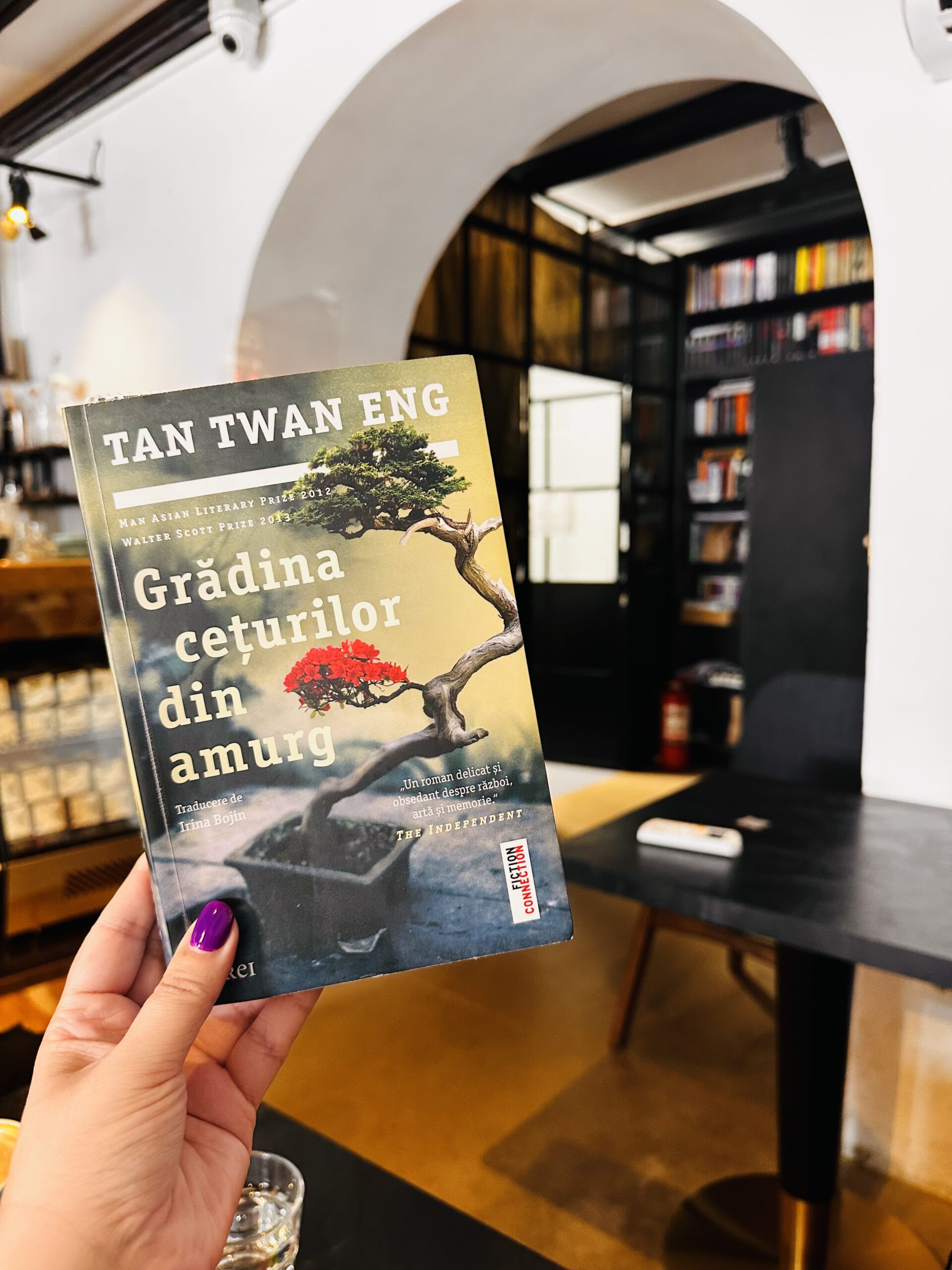
Do you feel that writing historical fiction has therapeutic functions, does it provide any satisfaction that could be described as justice being made? In fact, was this at least one of the purposes of The Garden of Evening Mists?
It might for some readers, but not for me. For me it draws a spotlight on certain events which are not well-known, or are in danger of being forgotten. I’m fascinated by the footnotes of history – the small, human events and stories that don’t make it onto the grand theatre of great events. It’s in the footnotes that I’ve often discovered the most illuminating angles to view the larger picture.
I’m also interested in exploring how periods of great uncertainty and change affect people’s lives. Moments in time when the world is changing bring out the best and worst in people. As a reader and a writer I’m attracted to realistic, flawed characters. Nothing in life is in black and white, and this is what makes writing so fascinating and challenging. I’ve often wondered what I would do if faced with certain alternatives, as the characters in my books were – would I have the courage and strength to make the right decisions? And what are the right decisions? I’m still looking for the answer.
Orhan Pamuk recently wrote that “novelists do not consciously dwell on what they do when they write their novels”, and that “The author of a novel is not always the best placed to interpret it, and eventually others may become more familiar with the text than he is.”
I consciously dwell on what I’m doing when I write. Wouldn’t you say that all writers have to? We have to decide on which word to use, the structure of our sentences, the placement of punctuation marks, the scenes we wish to describe to move the story along; we have to ascertain that the dialogue is realistic; we have to control the mood, the tone, the atmosphere so that it works for the entire book. Writing a novel is not an automatic, repetitive action like, for example, riding an exercise bicycle or swimming laps in a pool. But while I’m aware that I’m consciously dwelling on the writing process, my subconscious isn’t sitting idly by – it’s also infiltrating itself into the text. Perhaps it’s only halfway through writing the novel that the writer sits back and starts to recognise the pattern in the weave, which he wasn’t consciously aware of.
There are various ways to interpret a novel. Other people apart from the writer of a novel may become more familiar with the text, but each person will bring his or her own issues or interests into the process – which may ultimately either cloud the interpretation, or cast a new and original light on the book.
Especially in the beginning of your novel, I noticed a concerned tone regarding the effects that tourism has on us and our planet, and also observations on climate change. Furthermore, gardens such as Yugiri are misleading and fake, says Frederik at one point. Do you believe in the possibility of having and preserving any sort of natural beauty nowadays or is everything already compromised by the actions of the human race?
No, I don’t believe in that possibility, especially in today’s world, where everyone is posting photos online about the obscure places they’ve visited.
Spending time in nature is, I feel, essential for writers. It taught me to pay more attention to the world around me. And that’s one of the most essential skills a writer requires – the ability to notice the unusual in the mundane.
The ability of this form of seeing, or sensing, was also in a large part due to my aikido training. In The Gift of Rain I wrote about a foundational principle of aikido: ‘Stillness in movement; movement in Stillness.’ In aikido we’re taught to seek the quiet centre in the tornado of activities and emotions around us. Combining that training with my increasing appreciation of the natural world, I learned to look out for the small but telling details – ‘Too see a world in a grain of sand/and Heaven in a wildflower’, as Blake’s poem says.
In a traumatic context, even the most inoffensive things get to change their meaning for a long time, and this is what happens to Teoh Yun Ling when it comes to barbed wire, she cannot help but think of the Japanese concentration camps when she sees barbed wire fences surrounding properties. Perhaps my question is pointless since we have this book, but I’m still curious: what would you tell people who recommend others to stop bringing up historical injustices and crimes for the sake of peace?
I can’t tell anyone what to do, especially when I haven’t personally experienced or suffered from those injustices and crimes. It would be hypocritical and sanctimonious of me to do so.
While my novels spotlight various facets of the past, it’s impossible to encompass every viewpoint. They are novels, not history books. For me, the story, the characters and the use of language must always take precedence.
It’s essential to know history, especially now, when so many people in the world – leaders of nations, opinion-makers, politicians – are seeking to rewrite the past to fit their own agenda. History is being distorted in order to get us angry, to influence us and divert us down the road they want us to take. As LP Hartley wrote in ‚The Go-Between’, ‘The past is a foreign country; they do things differently there.’ Well, we have to know how differently. We have to arm ourselves with knowledge of history, by being able to distinguish what is true and what is a lie. If you don’t want to be just another sheep in the herd, start by understanding the past. And then you can determine your future yourself.
A few years ago I visited St George’s Church in Penang one morning. It’s an old and beautiful Anglican church, built in the early 19th century, and it’s the oldest one in South East Asia. That morning the church was empty except for an elderly Japanese couple being shown around by a church volunteer. She was telling the Japanese couple how the church’s roof had been damaged by Japanese aircraft bombing raids during the Second World War.
The Japanese man looked sombre. ‘Very bad, the war,’ he mumbled. ‘Very sorry, very sorry.’ The church volunteer brushed away his words. ‘Oh, it’s okay, long time ago,’ she said, smiling. ‘All forgotten already.’
I looked at her and thought, ‘No, it’s not okay. And it shouldn’t be forgotten.’ But later I asked myself, Perhaps she’s the wiser one: to forgive, to put the bitterness aside and go on with life?
Yet, it’s more important than ever today not to forget, because all those who had lived through the war are in the twilight of their lives; many have also passed away. It’s also essential because ‘History’ is constantly being manipulated to suit those who want reshape it to their agenda. I don’t condone wallowing in victimhood at all, but neither should we forget what happened.
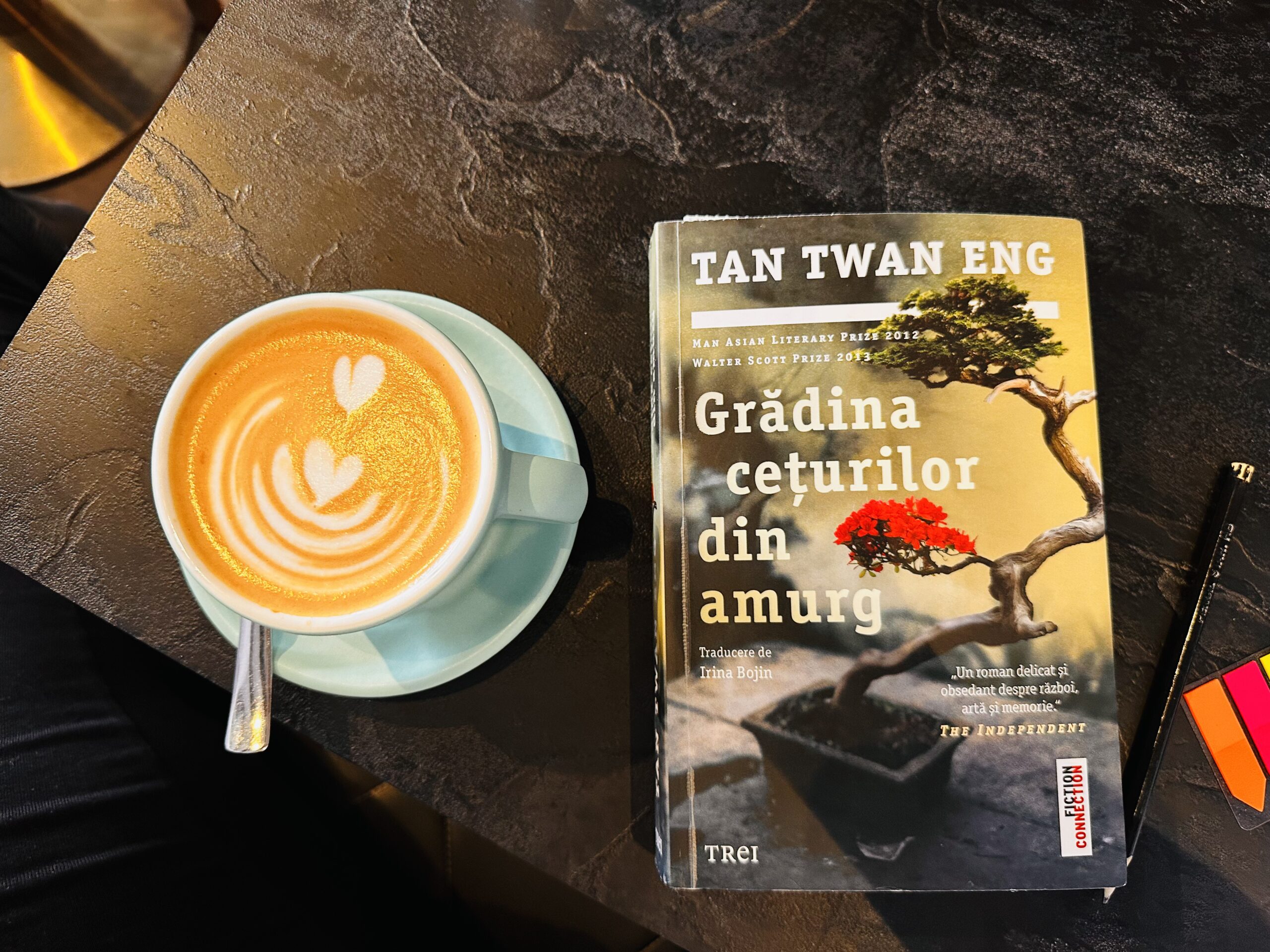
In the end, the message I was left with is something I deliberately tell myself daily in order to keep myself from being consumed by grudge and resentment, something Magnus tells Teoh Yun Ling about the Japanese, but could by applied on a global scale: you cannot hate an entire people based on something only some of them did. What is the main thing you hope your book transmits to its reader?
That’s for the reader to decide. I don’t tell them what to take away from my books. Each reader will have a different response to my books, and I don’t wish to disillusion them or disappoint them. Reading a book is such a personal and private activity, each reader will take something different from my books.
But what I do hope is that they were affected by the story, and that they would remember the book and the characters for a long, long time, be haunted by it in fact, and that they would recommend it to their friends and family. I hope that the book changes the way they view the world, however slightly.
My website where I write book recommendations has a motto that I often use to close an interview, hoping to get more recommendations and simultaneously make people aware that they can invest time in reading on a daily basis, so I would love it if you could tell us this: what are you reading today?
I’m actually reading more than one book at the moment: Long Island, by Colm Toibin; The Master of Go, by Yasunari Kawabata (I was given a Go set from Japan recently, by the widow of a man who had owned it, and I thought it’s a good time to re-read this novel). Fly, Wild Swans, by Jung Chang. It’s the long-awaited sequel to her book‚ Wild Swans.
Photos with the book: Anca Zaharia.